Forgive Me, Noodles, for I Treated You All Like Spaghetti
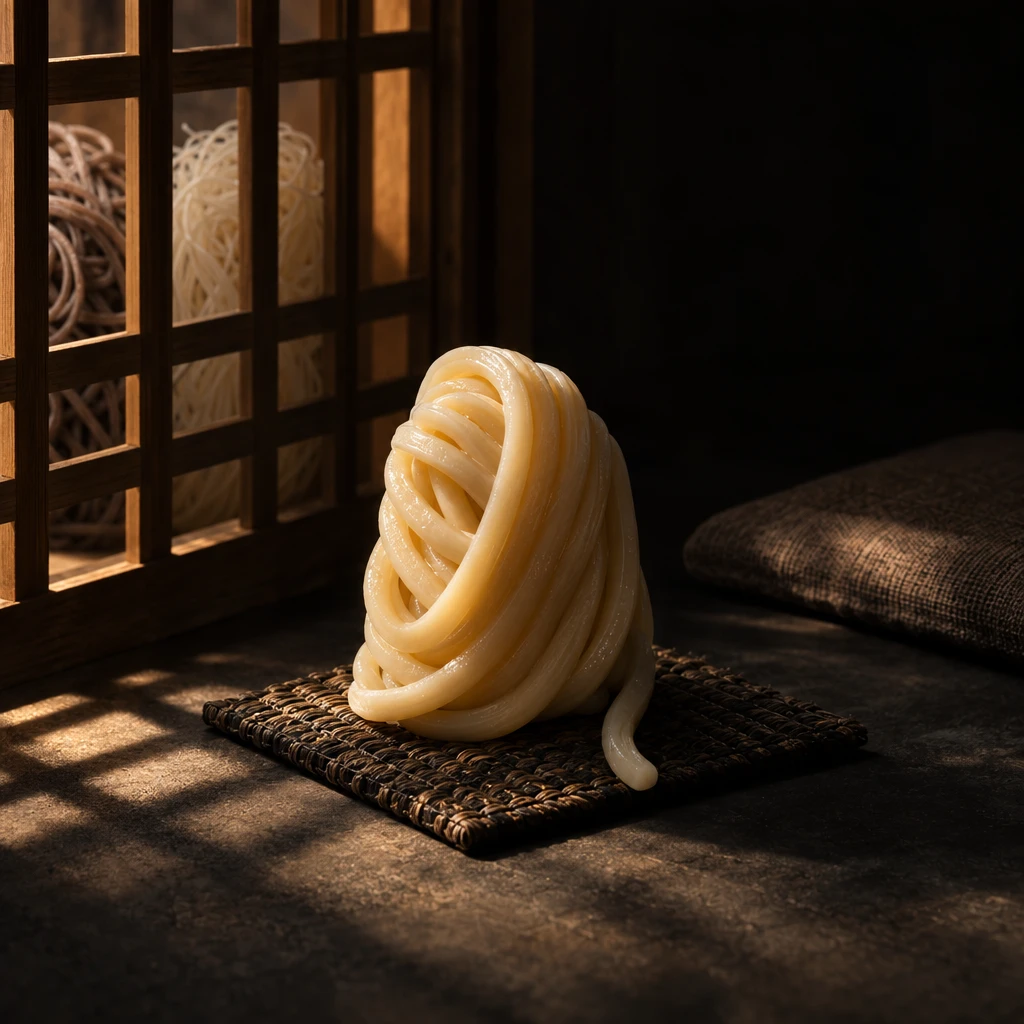
Father, pantry, internet, whoever is authorized to hear this: I have sinned against noodle specificity.
For years, I committed the same offense with the calm face of a person who believed herself practical. I would look at a recipe, note the noodle it called for, and then perform a private act of translation so fast it barely registered as a choice.
Udon? Thick spaghetti, spiritually.
Soba? Brown pasta, probably.
Rice vermicelli? Thin noodle, and are we not all thin noodles under God.
I said this with my shopping, if not out loud. Out loud, I was more refined. Out loud, I said, "I’m not rigid about ingredients." Out loud, I said, "Texture is subjective." Out loud, I became the sort of person who mistakes carelessness for cosmopolitan ease.
My Long Campaign of Substitution
The record is ugly.
I made Kake Udon with whatever long noodle was sulking in the back of the cabinet because I thought the broth was the point. I see now that this was like saying a winter coat is the same as a windbreaker because both involve sleeves. The whole comfort of the dish is in that soft, weighty chew, the way the noodle carries the broth instead of merely getting wet.
Then there was Zaru Soba, which I treated as a quaint serving suggestion for any noodle that could survive draining. This was a moral lapse as much as a culinary one. Cold soba is not just cold noodle. It is restraint. It is clean edges. It is the little shock of buckwheat, the reason the dipping sauce gets to be sharp and direct. I served a substitute once and told myself the difference was subtle. It was not subtle. It was only inconvenient to admit.
My worst behavior emerged whenever I made dishes from cuisines I had decided, very quietly, I was not qualified to take too seriously. That is the embarrassing part. Not the wrong noodle itself. The shrug.
I made Pancit Bihon and acted as though the name referred mostly to vibes. I gave the rice vermicelli role to a noodle with entirely different bounce and starch, then congratulated myself for being "resourceful." Resourceful is one of those words people use when they do not want to say, I assumed close enough was good enough because it was not my tradition to protect.
A list of phrases I used in my own defense:
- "It all ends up in a bowl"
- "The sauce will pull it together"
- "I’m just cooking at home"
- "Authenticity is complicated"
That last one is technically true, which is why it is such a useful hiding place.
The Aisle Where I Was Judged by Inanimate Objects
The correction did not arrive as a lecture. No elder appeared in a beam of light holding a strainer. I simply bought Udon Noodles one week because the store had it, and then Soba Noodles the next because I was tired of pretending they were decorative distinctions, like ribbon colors at a fair.
It was annoying. I wanted revelation to be glamorous. Instead, it was specific.
The udon was not a cousin of spaghetti. It was its own weather.
The soba was not a healthful variation. It changed the temperature of the whole meal, even before it cooled.
Then I made Laksa Lemak with the noodle it actually wanted, and I understood, with some bitterness, that spring and slurp and broth cling had been having a meeting behind my back for years. The dish had architecture. I had been treating architecture like curtains.
Finally, there was Shoyu Ramen. I had spent a long time talking myself around ramen noodles as though their particular spring were fussy, as though wanting that texture were a kind of elitism. Then I used Ramen Noodles and had to stand at the stove in silence, confronted by the fact that precision is not always snobbery. Sometimes it is just noticing what a dish is built to do.
What I Was Actually Ashamed Of
This is where the confession stops being cute.
I told myself that treating all noodles as interchangeable was relaxed, anti-snob, free of rules. But my so-called openness had a pattern. I could get very earnest about the right pasta cut for an Italian sauce. I could discuss ridges and bronze dies like a citizen of a tiny republic devoted to semolina. Yet when the noodle came from somewhere else, I became suddenly broad-minded in a way that mainly benefited my laziness.
That is not generosity. That is hierarchy wearing a soft sweater.
I do not think every home cook needs a perfectly stocked pantry or a thesis on starch. I do not think dinner should require a passport application. Sometimes you do use what you have. Sometimes you feed people first and sort out ideals later. I remain in favor of survival cooking.
But I no longer confuse substitution with neutrality. Shape is not a detail. Thickness is not decoration. Starch is not bureaucracy. These are not precious distinctions invented to make me feel provincial in aisle seven. They are part of the dish’s meaning, part of the intelligence built into it before I arrived with my opinions and one emergency box of pasta.
So yes, I still improvise. I still cut corners. But I try not to call every corner a circle.
That is my confession. I treated noodle choice like trivia because that let me feel above the rules. It turns out I was not above them. I was just not listening.