Tahini: the good stuff, and how to know
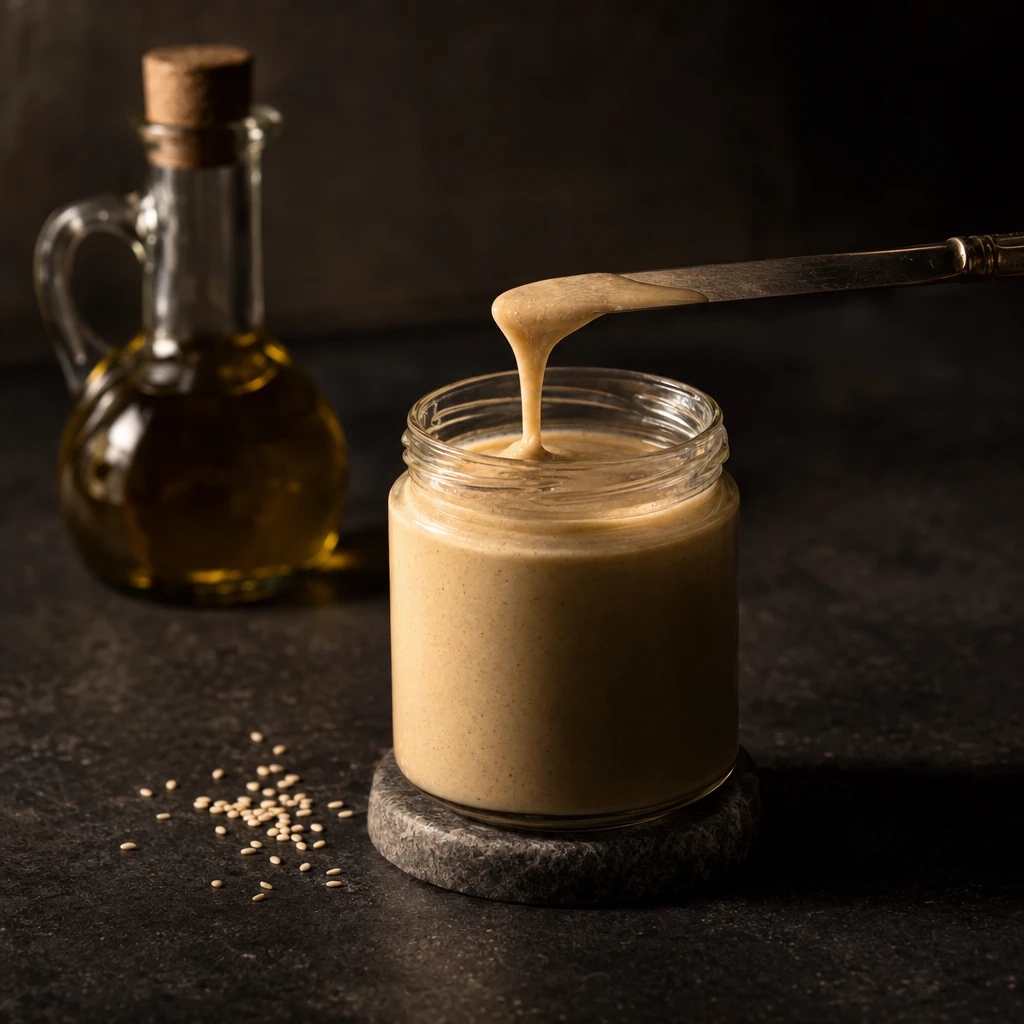
Open a jar of Tahini at room temperature and the first thing that should happen is a slow, resistant drip off the spoon. Not a pour. Not a plop. A lazy ribbon that takes its time. If it behaves like peanut butter, you bought the wrong jar. If it tastes bitter in a way that lingers past twenty seconds, you bought an old one.
I think about tahini more than is reasonable, so let me get the ingredient nerd part out of the way first.
The seed map
Most of the tahini you see on supermarket shelves, even the ones labeled as products of Israel, Lebanon, or Turkey, starts its life in Ethiopia. Specifically in Humera, a dusty town in Tigray, where a variety of sesame called Humera White grows in ridiculous quantities. It's sweeter, fattier, and less hull-forward than sesame grown almost anywhere else. After Ethiopia's coffee, sesame is the country's second biggest export, and most of it gets shipped raw to Israel, Turkey, or Greece for processing. The Humera seed is the reason good tahini tastes like toasted cream. No surprise that Israelis, per capita, eat more sesame than anyone on earth except the Chinese.
The grinding matters too. The best West Bank factories, the old ones in Nablus like Al Karawan and Al Jebrini, still use basalt stone wheels that turn slowly enough to never cook the paste with friction. Industrial steel mills get hot. Hot tahini oxidizes. Oxidized tahini is the bitter, chalky stuff that gives the ingredient its bad reputation.
How to buy it
Look for a single ingredient: hulled sesame seeds. That's it. No oil, no salt, no stabilizers. The paste should separate in the jar, with a generous cap of oil on top. That's a sign it wasn't homogenized to death. Stir it back in with a butter knife or a chopstick.
The flavor test: a spoonful should taste sweet-bitter, toasty, and resolve clean. Natural bitterness in tahini comes from sesame lignans (sesamin, sesamolin) and it fades from the palate inside twenty seconds. Rancid bitterness, the kind from oxidized fat, sticks around and builds. That's the one-line test for whether your jar is worth keeping: does the bitterness leave, or does it stay.
The obvious uses, done right
People associate tahini with Hummus and fair enough, because hummus is where most jars go to die. The common mistake is treating tahini as a small supporting player. It isn't. In a proper Beiruti-style Hummus the tahini to chickpea ratio is closer to one-to-one by weight than most recipes admit, and the result is a paste that tastes like sesame with chickpea undertones rather than the other way around. The Jerusalem Hummus pushes even further: warm chickpeas, mountains of tahini, lemon, a slick of olive oil, maybe a dusting of cumin. It eats like a main course because structurally it is one.
Baba Ghanoush is the other classic, and the one place people actually respect the tahini-to-base ratio. Smoked eggplant wants a lot of tahini to round its bitterness into silk. Don't skimp.
The less obvious uses
This is where I get evangelical. Tahini is a sauce base. Thin a few spoonfuls with lemon juice, ice water, and a crushed garlic clove and you have the dressing that belongs on everything: roast cauliflower, grilled fish, a bowl of rice, a Falafel Plate (obviously), but also inside a Chicken Shawarma wrap where it does more work than garlic sauce ever could.
Sweet tahini is less familiar to Western cooks and more interesting than it should be. A spoonful swirled into a brownie batter makes the chocolate taste more like chocolate. A drizzle over roasted stone fruit with honey is a four-minute dessert. Tahini ice cream exists and is one of the best things you can make with two cans of condensed milk.
And then there's Tabbouleh, which technically doesn't use tahini at all, but which wants a little tahini-lemon drizzle on the side if you serve it with hummus. Everything on a mezze table wants to talk to everything else.
Stocking it
A jar of decent Tahini lasts months in the fridge (it separates more when cold, just stir). If you're building a pantry that leans Levantine, pair it with Sumac for brightness and you are most of the way to any table on the eastern Mediterranean.
The jar sits next to the olive oil on my counter. It earns that spot.