The case for braising: how cheap cuts become the best thing you'll cook all year
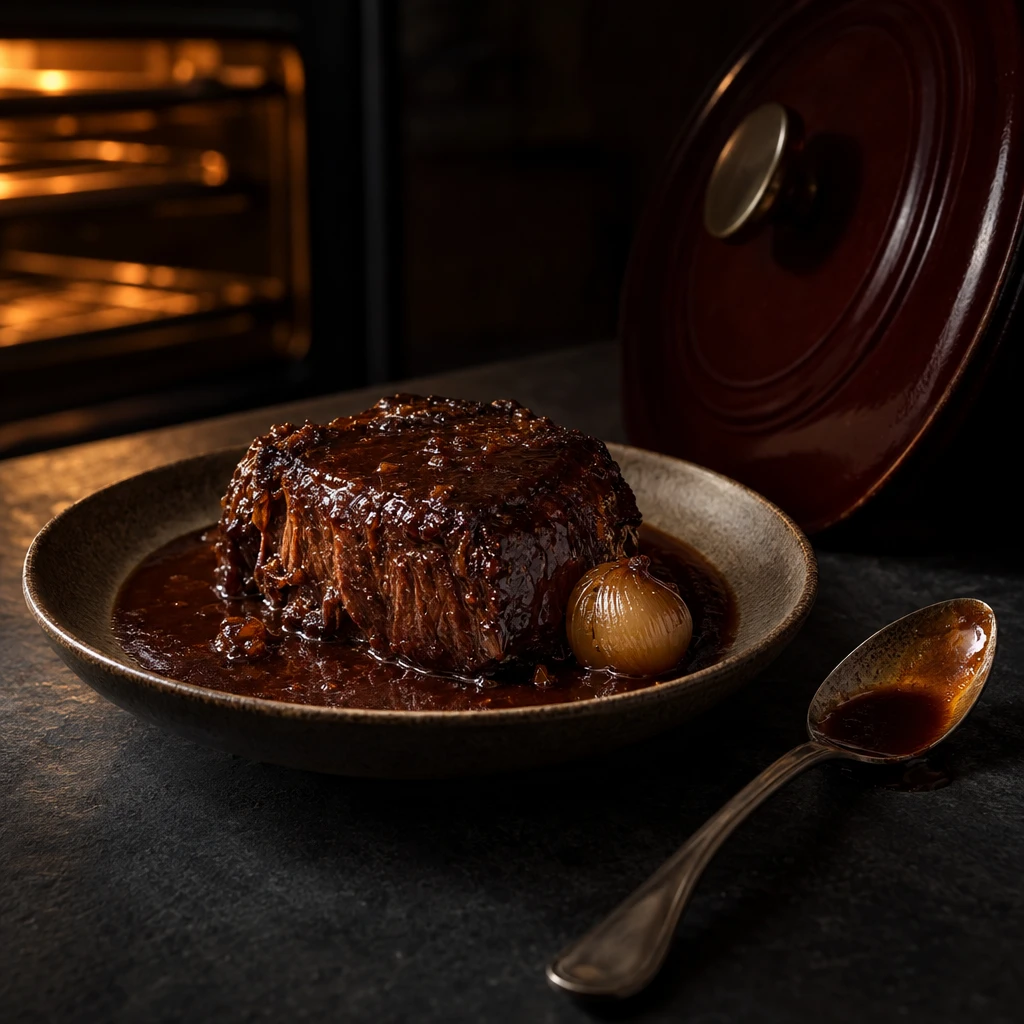
There is a specific kind of cook who has been burned by braising. They followed a recipe, they bought the cut, they spent three hours on a Sunday, and what came out of the oven was stringy and sad, sitting in a thin broth that never quite became sauce. They concluded, reasonably, that braising is finicky. It is not. It is forgiving to the point of being almost hard to mess up, but only once you understand what is actually happening in the pot.
Braising is a conversion. You are taking collagen, the tough connective tissue that makes cheap cuts cheap, and melting it into gelatin, the thing that makes a sauce cling to a spoon and a piece of meat feel like it is lubricated from the inside. That conversion happens in a narrow, slow window. Collagen begins to dissolve around 70C and wants to spend hours there, not minutes. Push the temperature and the muscle fibers squeeze out their water before the collagen has time to do its work. You end up with dry meat in a watery pan. Hence the whole point.
Get the temperature right, then walk away
America's Test Kitchen and most serious-cooking writers land in the same place: 150C to 165C, oven, lid on. The reason is boring and important. A burner on a stovetop concentrates heat at the bottom of the pot, which is where the starches in your braising liquid live, which is where scorching happens. An oven surrounds the pot with gentle, even air. The braise breathes.
This is the single highest-leverage change most home cooks can make. Brown on the stove, braise in the oven. Do not stir. Do not peek more than twice. The pot is doing work that benefits from being ignored.
The sear is not optional, but it is not everything
Salt the meat in advance, ideally the day before. This is a Samin Nosrat point and she is right about it: salt needs time to get past the surface, and a braise cannot fix an under-seasoned piece of meat from the inside later. Pat it dry, sear hard, and do not crowd the pan. Brown sticks to the bottom of the pot and becomes the backbone of the sauce once you deglaze.
The sear matters because of Maillard, not because it "seals in juices," which is a myth that refuses to die. What you are building is flavor, not a moisture barrier. Coq Au Vin is the clearest classroom for this. The chicken gets a proper sear, the lardons render their fat, wine and stock reduce around the bird, and by the end the sauce is the point and the chicken is almost beside it.
Acid carries the whole thing
Every great braise has an acid doing quiet work in the background. Wine, beer, tomato, vinegar, tamarind, yogurt. Acid actually speeds up collagen breakdown, so the splash of wine you add at the start is earning its keep twice: once as flavor, once as chemistry. Carbonnade Flamande uses dark Belgian beer and a spoonful of mustard. Osso Buco runs on white wine and tomato. Lamb Tagine leans on preserved lemon and the sweetness of onions slumped to jam. Different cuisines, same structural move.
The long-haul braises are a different animal
Some braises are not really Western braises at all. Beef Rendang reduces a coconut-milk braise until the liquid fries the meat in its own rendered fat and spice paste. It takes four hours and the last thirty minutes are not braising anymore, they are a slow toasting. This is worth knowing about because it explains why rendang tastes the way it does. It is a braise that crosses the finish line and keeps running.
A few last things, plainly
Don't submerge the meat. A braise is not a soup. A third of the way up the sides is plenty. The exposed surface concentrates flavor while the bottom tenderizes.
Make it a day ahead when you can. Braises get better overnight. The fat separates and can be skimmed, the flavors marry, and reheating is friendlier to collagen than the initial cook.
And if the sauce is thin at the end, pull the meat out, put the pot on the stove, and reduce until it coats a spoon. This is not cheating. This is finishing.
A note on gear
You need one thing and it is a Dutch Oven. Heavy, lidded, oven-safe. Everything else is optional. A few Bay Leaves in the pot and a half bottle of decent Red Wine will carry you through most of the classics in this piece. Don't use wine you wouldn't drink, but don't use wine too good to cook with either. Braises are democratic that way.