Broken, Glossy, Saved: Warm Emulsions for Better Weeknight Cooking
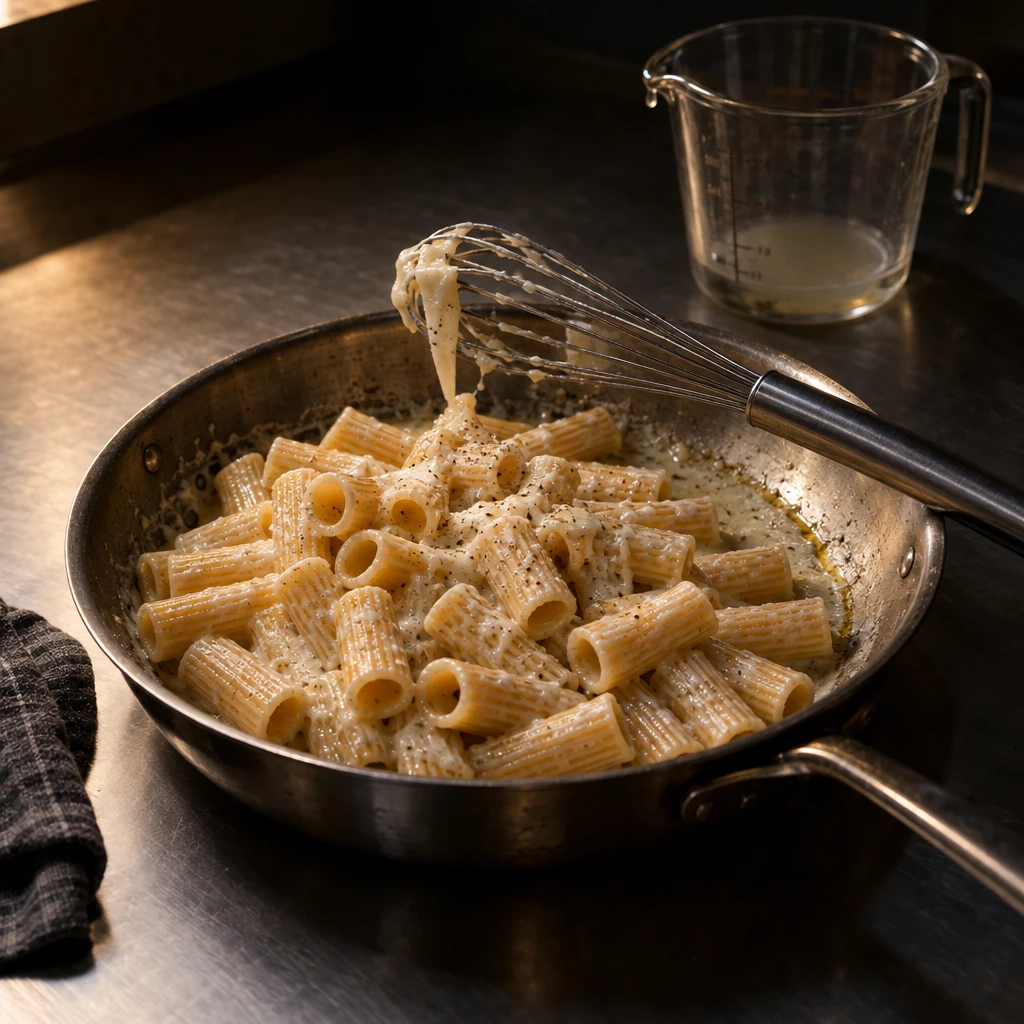
The usual weeknight sauce failure is easy to spot. The noodles are hot, the pan smells promising, and then the fat slides off into a shiny ring at the edge. What looked silky in the spoon turns greasy on the plate.
That is not a personality flaw, and it is not a reason to memorize French terminology. A warm emulsion is just a useful agreement between fat and water, helped along by starch, protein, or a naturally cooperative ingredient. Once you know what each helper does, you can build sauces that cling instead of pool.
What a warm emulsion actually needs
Most warm emulsions are built from three parts:
- fat, like butter, olive oil, cheese, nut paste, or sesame paste
- water, from pasta water, vegetable moisture, stock, or a splash of plain hot water
- a stabilizer, often starch, milk proteins, mustard, miso, or finely ground nuts
The practical rule is simple: gentle heat, movement, and the right order.
If the pan is too hot, the sauce separates before it has a chance to come together. If there is no water phase, the fat has nothing to disperse into. If you dump everything in at once, you miss the chance to control texture.
That is why Lemon Ricotta Rigatoni works. Ricotta, especially good Ricotta, is not just there for richness. Its proteins help the sauce hold, while pasta water loosens it into something glossy enough to coat ridges of rigatoni. The lesson is not “add cheese.” The lesson is add cheese with warm water and toss until it turns from lumpy to fluid.
Butter and dairy are forgiving, if you respect the heat
Butter is the weeknight cook’s friend because it carries flavor and gives immediate shine. But butter alone is not a finished sauce. It needs a little water and a little agitation.
In Miso Butter Greens Pasta, butter meets White Miso Paste. Miso does double duty here. It seasons, of course, but it also helps the sauce stay unified because its dissolved solids give the mixture structure. Add a spoonful of pasta water, swirl over low heat, and the sauce goes from melted butter to something that actually clings to the greens and noodles.
The same logic powers Butter Soy Noodles. Butter and Soy Sauce seem almost too simple, which is why they get mishandled. Soy sauce is your water phase and your salinity, but it is also thin. Without enough tossing and a touch of noodle water, the butter can sit on top instead of binding. A glossy noodle sauce usually arrives in the last 30 seconds, when the pan is off or nearly off the heat and the noodles are moving constantly.
This is the part many recipes leave unsaid: your pan should sound lively, not furious. A hard boil is often the moment a promising emulsion breaks.
Miso, mustard, tahini, nuts: pantry emulsifiers with personality
Some ingredients are naturally good at persuading fat and water to get along. Mustard is one of the clearest examples. In Fish in Mustard Sauce, Dijon Mustard does more than sharpen the sauce. Its mucilage helps stabilize the mixture, which is why a mustard-butter or mustard-cream sauce can feel so smooth with very little effort. The trick is to whisk mustard into the liquid first, then mount in fat gradually rather than dropping cold butter into a raging pan.
Tahini behaves differently, but the principle is close. Sesame paste can seize when it first meets liquid, then relax into a smooth sauce as you keep whisking. That makes it ideal for a warm finish with crisp tofu. With Crunchy Tofu, a spoonful of Tahini loosened with hot water, a little acid, and perhaps a drop of soy creates a savory coating that feels substantial without becoming heavy. If it looks too thick at first, that is not failure. Keep adding warm water a tablespoon at a time.
Then there are nuts. In Pasta with Pistachio, finely ground Pistachios act almost like both flavoring and structure. Nut particles give the sauce body, while their oils create richness. The common mistake is treating nut sauces like pesto and leaving them raw and dense. Warm them gently with pasta water and you get something looser, shinier, and much better at coating pasta.
How to save a sauce that starts to split
Even a good method wobbles sometimes. When a warm emulsion looks oily, tight, or grainy, rescue it fast:
- Take it off the heat. Separation accelerates in an overheated pan.
- Add a small splash of warm water or pasta water. This gives the sauce a water phase to re-form around.
- Whisk or toss with energy. Movement matters as much as ingredients.
- Add a fresh spoonful of stabilizer if needed. A dab of ricotta, mustard, miso, or tahini can bring things back.
The deeper point is that these sauces are not precious. They are responsive. A warm emulsion is less like a fixed formula and more like a texture you steer toward.
Once you start noticing that pattern, weeknight cooking gets easier. You stop asking whether a dish is “supposed” to have a sauce and start seeing what the pan already offers: some fat, some water, one good binder, a minute of attention. That is often enough to turn dinner from slick to glossy, and from separate parts into a meal that actually holds together.