The Andes Had Freeze-Drying First
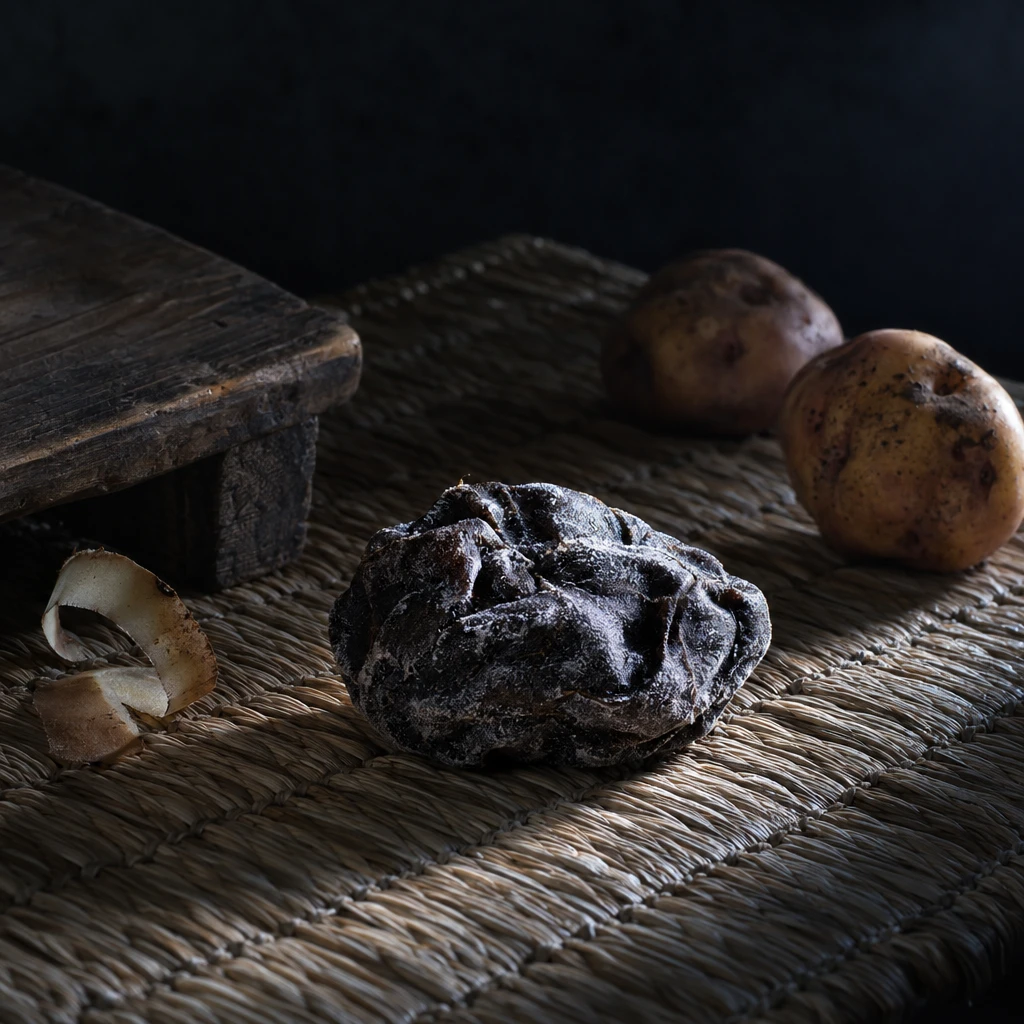
“Freeze-dried potato” sounds like a product of stainless-steel chambers, vacuum pumps, and the space age. Yet centuries before industrial machinery, communities on the Andean altiplano were preserving potatoes with a system powered by bitter nighttime frost, intense daytime sun, dry air, water, and practiced feet.
The result was chuño: light enough to transport, durable enough to store for years, and unlike any fresh potato in flavor or texture. It was not emergency food made from lack. It was a deliberate technology, one that helped Quechua and Aymara households manage harvests and supported trade, taxation, and Inka state logistics across difficult terrain.
A Preservation Machine Made of Weather
The high Andes present farmers with a severe bargain. Potatoes thrive in the region’s varied elevations and soils, but frost can arrive hard, and harvest abundance does not last by itself. Chuño turned that threat into a tool.
To make black black_chuno, small potatoes are traditionally spread outdoors during the coldest part of the year. They freeze overnight, thaw beneath strong sunlight, and are pressed or trampled to expel water and loosen their skins. Repeated exposure dries and darkens them, concentrating their earthy, sometimes mineral character.
Calling this “freeze-drying” is useful, though it should not suggest that the Indigenous process is identical to modern vacuum freeze-drying. The resemblance lies in its intelligent control of frozen moisture and dehydration. The altiplano itself functions as the apparatus, but only because people know when to spread the potatoes, when to turn them, and how to judge each stage.
White chuño, commonly called tunta, follows another path. After freezing and pressing, the potatoes are washed or soaked in cold running water, then dried in the sun. This removes color and some of the stronger flavor, producing pale, firm pieces with a cleaner taste. Black chuño and tunta are therefore not cosmetic variations. Their different processing methods create different ingredients.
The Potato After the Potato
Rehydrated chuño does not return to its former state. That is precisely the point. Its porous structure absorbs broth and seasoning while retaining a resilient chew. In Paceño Chairo, chuño gives the highland soup substance and a texture that fresh potato alone cannot reproduce. The ingredient does not merely survive in the bowl. It organizes the bowl.
The same distinction becomes clear in Chuño Phuti, where soaked, chopped chuño is cooked with aromatics and often eggs. Its craggy pieces carry onion, chile, and fat differently from smooth cubes of boiled potato. Substituting a fresh potato may still make dinner, but it makes another dinner.
Tunta offers its own possibilities. Its pale interior and absorbent body make it particularly suited to fillings, sauces, and layered flavors, as in Andean Stuffed Tunta. The preservation process creates room, both literally and sensorially, for other ingredients.
That transformation is easy to misunderstand in kitchens where “fresh” automatically means superior. Preservation is often described as a compromise, as though drying only subtracts. Chuño demonstrates the opposite. Water leaves, but new textures, keeping qualities, and culinary uses appear.
From Household Store to Imperial Provision
A food that weighs less, travels well, and can wait through poor harvests has value beyond the family storeroom. Chuño circulated through Andean exchange networks and became useful to the Inka state, which collected and stored food to supply laborers, armies, officials, and communities facing shortage. Its long life helped translate local environmental knowledge into logistical reach.
That history did not end with the Inka. Chuño remained part of everyday highland cooking through colonial disruption and into the present, carried forward by the communities that made it meaningful in the first place. Its endurance is not evidence that the Andes were frozen in time. It shows how a successful technology can keep adapting without surrendering its foundations.
Chuño also belongs to a wider Andean vocabulary of transformed potatoes. papa_seca, typically cooked, cut, and dried, develops a dense texture suited to long simmering. It anchors dishes such as Pork Carapulcra, where the dried potato thickens the stew and drinks in chile, pork, and toasted seasonings. It is related to chuño by purpose, but not interchangeable with it.
A fresh Potatoes tuber is a harvest. Chuño is a plan for what comes afterward: frost anticipated, sunlight enlisted, labor coordinated, hunger held at a distance. Its long life begins not with a machine, but with close attention to a landscape and the knowledge to make weather keep food.