Forgive Me, Portugal: I Poured the Sardine Oil Down the Sink
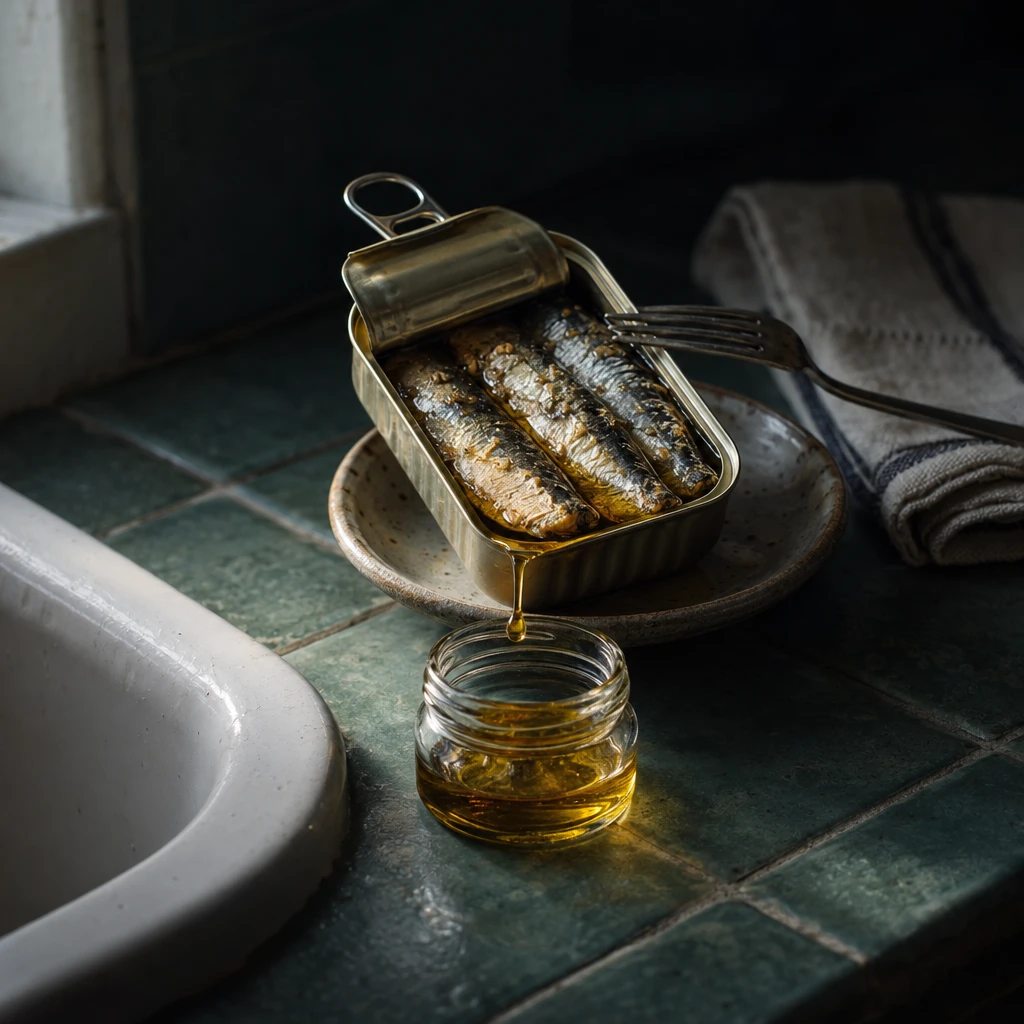
Portugal, forgive me, for I have drained.
It has been three days since my last offense, though only because I have not opened a tin since Tuesday. I come before you voluntarily, if you do not count the pressure exerted by my recycling bin, where the evidence still gleams.
I bought the good sardines. The expensive ones. The ones in the beautiful tin that made me feel less like a person avoiding the grocery store and more like a discerning maritime patron.
Then I opened them, lifted out each silver body with the concentration of an art conservator, and poured the oil down the sink.
Every drop.
The Offense
I did not merely discard the oil. I treated it as contaminated.
I tilted the tin over the drain and held the sardines back with a fork, protecting the fish from its own surroundings. When one sardine began to slide toward freedom, I gasped. Not because I might lose the fish, but because it might touch the oil again.
Then I made Sardines on tomato toast. I toasted good bread. I rubbed it with tomato. I arranged the sardines in neat rows.
And then, may the patron saint of pantry dinners turn away, I opened a new bottle of olive oil and drizzled it over the top.
Fresh oil, I believed, was an ingredient. Tin oil was packaging.
This distinction had no basis in flavor, chemistry, economics, or common sense. It came to me fully formed from the same private tribunal that says beans cooked from dried are morally superior, weekday garlic must be minced by hand, and dinner does not count if the cook appears insufficiently tired.
I had paid a premium for Sardines packed in olive oil. Apparently, I thought the olive oil was there to keep the sardines comfortable during transit.
Aggravating Circumstances
This was not an isolated lapse.
For six months, I drained every tin. I watched golden, fish-rich oil disappear while congratulating myself for buying conservas instead of ordinary canned fish. The label suggested heritage. The price suggested discernment. My behavior suggested I believed half the product was decorative fluid.
The worst incident involved White Bean Salad with Sardines. I drained the sardines. I drained the Cannellini Beans. Then I made a dressing from newly opened olive oil and Sherry Vinegar.
I whisked it in a little bowl.
That detail troubles me most. I had oil. I had acid-friendly, deeply savory oil that had spent months getting acquainted with the fish. But I required my dressing to arrive with no history, like a witness whose record had been expunged.
I did the same with Mussels. I prepared Mussels pintxos, discarded the escabeche, and then wondered why the bread needed something sharp. Reader, the sharp thing had just entered the plumbing.
This is what luxury branding did to me. It taught me to revere the object and mistrust its practicality. I admired the tin as design, the fish as craftsmanship, and the oil as something between bubble wrap and bathwater.
Yet if a restaurant had served that same oil in a shallow ceramic dish, I would have dragged bread through it and called the experience transportive.
My Proposed Penance
I am not asking for absolution without reform.
From now on, I will taste before I drain. I will spoon sardine oil onto toast, whisk it into vinaigrette, fold it into mayonnaise, and let it enrich beans without demanding a clean résumé.
I will judge packing liquids by what they contain, not by whether they arrived wearing a screw cap.
I will also confront the related matter of mackerel. Recently, while making Mackerel cakes with mustard dressing, I caught myself hovering over the sink with a tin of Mackerel. The old reflex stirred. The drain waited below, dark and indiscriminate.
But I stopped.
I saved the oil in a small jar. I used some in the dressing. Nothing collapsed. No culinary authority arrived to confiscate my knives. Dinner tasted more like mackerel, which, after a period of reflection, I accept was the point.
So forgive me, Portugal, if forgiveness is available. If not, assign me the proper penance. Give me bread, beans, vinegar, and every tin I once misunderstood.
I will keep the oil this time.