I Bought the Wrong Olive Oil and Built My Whole Personality Around It
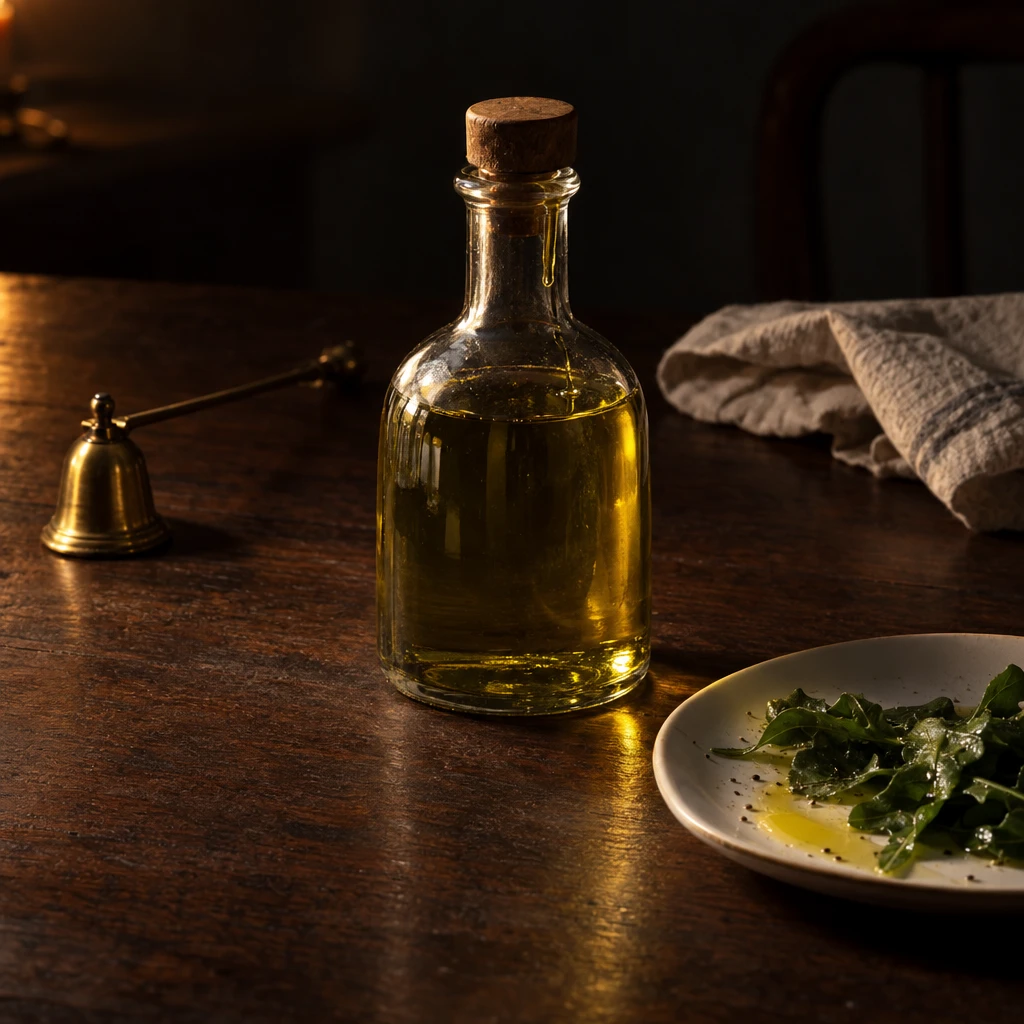
Forgive me, pantry, for I have performed.
I would like to confess that for a period of roughly eighteen months, I did not merely use olive oil. I staged it. I narrated it. I held the bottle up to the light as if I had been appointed by a small Mediterranean tribunal to determine whether dinner had virtue.
The original sin was not buying an expensive bottle. People are allowed to have nice things. The sin was buying one bottle of Picual Olive Oil after reading three articles and then deciding that this purchase revealed something stable and admirable about my character.
I became, overnight, a person who said things like, "I prefer something a little more peppery," though if you had blindfolded me, spun me around, and handed me motor oil, I might have called it robust.
The bottle became the sermon
The bottle sat on the counter like a relic. Tall, dark, imported. I used it for everything at first, out of panic that using it sparingly would suggest I was not the kind of person who owned it naturally.
So yes, I made Ratatouille with the expensive oil. I let eggplant drink up fifteen dollars' worth of my self-regard. I fried onions in it as if I were signaling to an invisible audience that thrift was beneath me, while simultaneously feeling sick about the cost.
Then I bought a second bottle, the one I actually needed, Everyday Olive Oil. This one I kept by the stove, slightly behind the salt, as if it were a shameful but practical relative who must not be introduced to guests.
My rules were inconsistent in a way that now feels almost artistic:
- Expensive oil for vegetables if anyone might see me cook them
- Cheap oil for weeknight beans, unless I was feeling low and wanted to feel superior to my own dinner
- Expensive oil for bread, obviously
- Cheap oil for roasting, unless I had recently read about smoke points and was trying to be the sort of person who reads about smoke points
I was not cooking. I was auditioning.
Drizzle theater
The absolute low point was the table-side drizzle.
You know the move. The bottle comes out after the food is already plated. There is a pause. The wrist softens. Someone says, "Oh, wow," and I pretend this response is to the tomato, not the choreography.
I did this to Horiatiki with the gravity of a bishop blessing a fleet. I did it to Dakos and spoke, with criminal calm, about "fruitiness". I floated a green-gold ring over Gazpacho Andaluz and then, because apparently I wished to be arrested by the cuisine police, added Sherry Vinegar while explaining that the oil "needed lift."
Needed lift. I said this in my home, with a straight face.
There was also the issue of labels. I learned just enough to become unbearable. I could tell you that Arbequina Olive Oil was buttery and that picual had bite, and this was useful knowledge in exactly the same way that owning a scarf indoors is useful knowledge. It gave me something to do with my mouth.
What I could not tell you was why a bottle had become a moral test. Why I felt faintly noble using one oil and faintly fraudulent using another. Why the plain bottle made me feel as if I had been caught buying pre-sliced mushrooms.
The cheap one on the table
The correction came, as corrections often do, in a very boring moment.
I was making Citrus Olive Oil Cake for friends, and I reached automatically for the expensive bottle, because cake, guests, witness protection. Then I stopped and had the humiliating thought that if the entire dessert depended on my guests identifying the oil as single-estate and emotionally complex, I had failed at cake.
So I used the other bottle.
No one noticed. Worse, everyone liked it.
This is the part where I would love to report that I was cured instantly, that I strode into the kitchen, set both bottles side by side, and renounced all hierarchy. That is not what happened. I still read the labels too long. I still get a little flushed when someone asks, casually, what oil I use. I still hear a tiny courtroom in my head when I pour.
But I have learned that half the shame was invented for me, and the other half I invented myself. Home cooking is full of these private status games, these little liturgies of being the kind of person who knows. We take an ingredient that is supposed to make dinner taste better and turn it into evidence.
So here is my confession in plain language: I bought the wrong olive oil, then made it my whole personality because choosing a bottle felt easier than admitting I wanted to seem competent, worldly, and worth inviting over again.
Now, sometimes, I put the cheap one on the table in front of other adults. Nothing happens. The salad survives. My reputation remains strangely intact. And the meal, which is the thing I was allegedly trying to make all along, tastes like dinner instead of character development.