The Pantry That Survived Empire: Puerto Rico in 6 Dishes
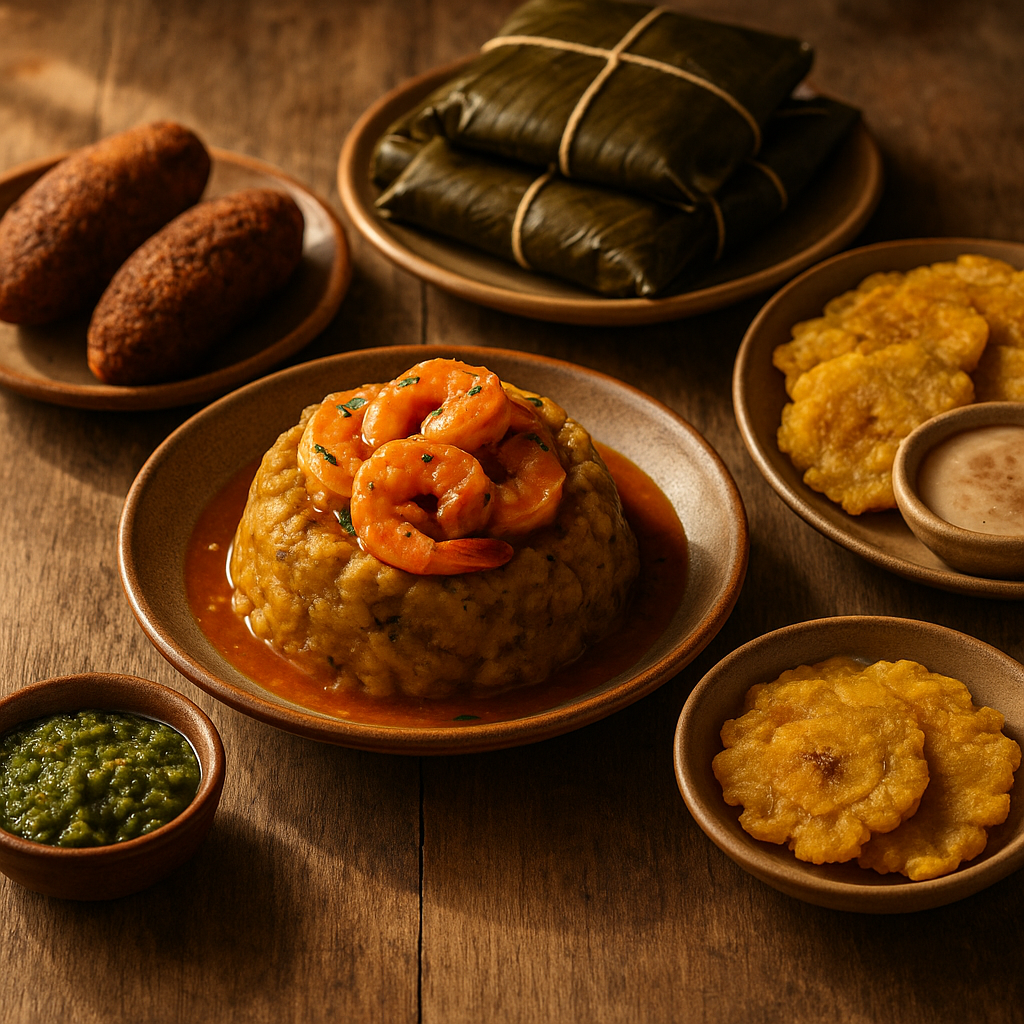
The sound comes first: garlic and Fresh Culantro hitting fat, plantain meeting oil, a packet of masa unwrapped at Christmas. Puerto Rican food history is often told through conquest, trade, or restaurant fame, but the island’s cooking language lives somewhere smaller and tougher than that. It lives in the pantry reflex, in what gets pounded, grated, wrapped, and fried when money is short, family is large, and memory needs feeding.
That is why a single origin story never quite works here. Puerto Rico’s table was shaped by Taíno agriculture, Spanish colonial rule, the forced arrival of Africans, and later migration to and from the mainland United States. But the through line is not a neat fusion tale. It is continuity under pressure.
The base note: what survived the conquest
Before there was a Puerto Rican “cuisine” to name, there were island staples: cassava, peppers, herbs, coconut, and cooking methods built around pounding, roasting, and stretching ingredients. Some foods disappeared or were transformed under colonization, but the pantry did not simply reset. It adapted.
You can taste that endurance in Culantro Sofrito. Sofrito is not just a seasoning paste. It is a way of organizing flavor, an argument that the meal starts before the pot is hot. The version centered on Fresh Culantro, garlic, peppers, and onion carries Indigenous and Afro-Caribbean continuities more clearly than many grander dishes do. Later additions and household variations changed it, of course. That is the point. A base can survive because it is flexible.
The same is true of root crops and green bananas. Cassava and Plantain became daily insurance, reliable starches that could be boiled, mashed, grated, or fried. Under colonial rule, when land, labor, and status were tightly controlled, those ingredients offered something essential: a way to make filling food from what the island could still grow.
Fried food as public history
If you want to understand how survival food became identity marker, skip the white tablecloth and go to the fritter case. Kiosks and roadside stands preserve a history that is easy to dismiss as casual eating and impossible to separate from Puerto Rican life.
Take Tostones con MayoKetchup. Twice-fried green plantain is a technique with a long Caribbean life, but in Puerto Rico it became a staple side, snack, and social food. The famous pinkish sauce came later, with the logic of modern fast food and local improvisation. That is part of the island’s history too. Dishes do not freeze in their oldest form to stay authentic. They keep absorbing the present.
Then there are Alcapurrias, those torpedo-shaped fritters whose crisp shell hides a softer interior and often a savory filling. Their masa, typically built from grated green banana and yautía, belongs to a deep tradition of turning stubborn starches into something portable and satisfying. The frying itself tells another story: African diasporic technique and taste shaping what became central to Puerto Rican street food. What looks like a beach snack is also a record of labor, adaptation, and the skill of making humble ingredients feel abundant.
The mortar, the parcel, the feast
Some dishes become “national” because they are served on special occasions. Others get there because people can make them out of the pantry they trust. Puerto Rico’s most beloved foods often do both.
Camarones Mofongo is the clearest example of a dish that is really a method in disguise. Mofongo is not one fixed recipe. It is a structure: fried Plantain pounded in a pilón with garlic, pork or broth, and seasoning, then shaped and topped or filled. Its roots are commonly linked to West African fufu traditions, but in Puerto Rico the technique took on the island’s ingredients and habits. Today shrimp mofongo may appear as a restaurant signature, but the dish still announces an older truth: pounding starch into a meal is one of the most durable cooking ideas in the Atlantic world.
And then there is Pasteles, perhaps the most moving proof that a food can carry history precisely because it is so much work. Pasteles are holiday food, yes, but they are also archive. Grated roots or green bananas, seasoned filling, banana leaf wrapping, a bit of Annatto for color and depth, hours of family labor around the table. This is not convenience cooking. It is ceremonial persistence. Spanish colonization brought pork, olives, and other ingredients into the mix, but the wrapping, the masa logic, and the communal labor tie the dish to older island and Afro-Caribbean foodways. Every December, the pasteles line says the same thing: we are still here.
Coconut, sweetness, and the quiet finish
Not every survival food looks austere. Some become silk.
Tembleque turns coconut into one of Puerto Rico’s most elegant desserts, a soft pudding that barely holds its shape. It speaks to the coastal Caribbean pantry, to the economies of sugar and coconut, and to the way celebration can grow from ingredients that are local, practical, and deeply familiar. Tembleque is gentle, but it is not minor. It shows that endurance is not only about heft and salt. It is also about keeping pleasure in the repertoire.
What these six dishes share is not a single ancestor or a tidy national script. They share a grammar: grate this, pound that, season early, fry carefully, wrap for later, make sweetness from what the island gives. Empires changed rulers, trade routes, and official languages. The pantry kept speaking anyway.