Put Down the Peeler: Skinning Vegetables Is Culinary Vandalism
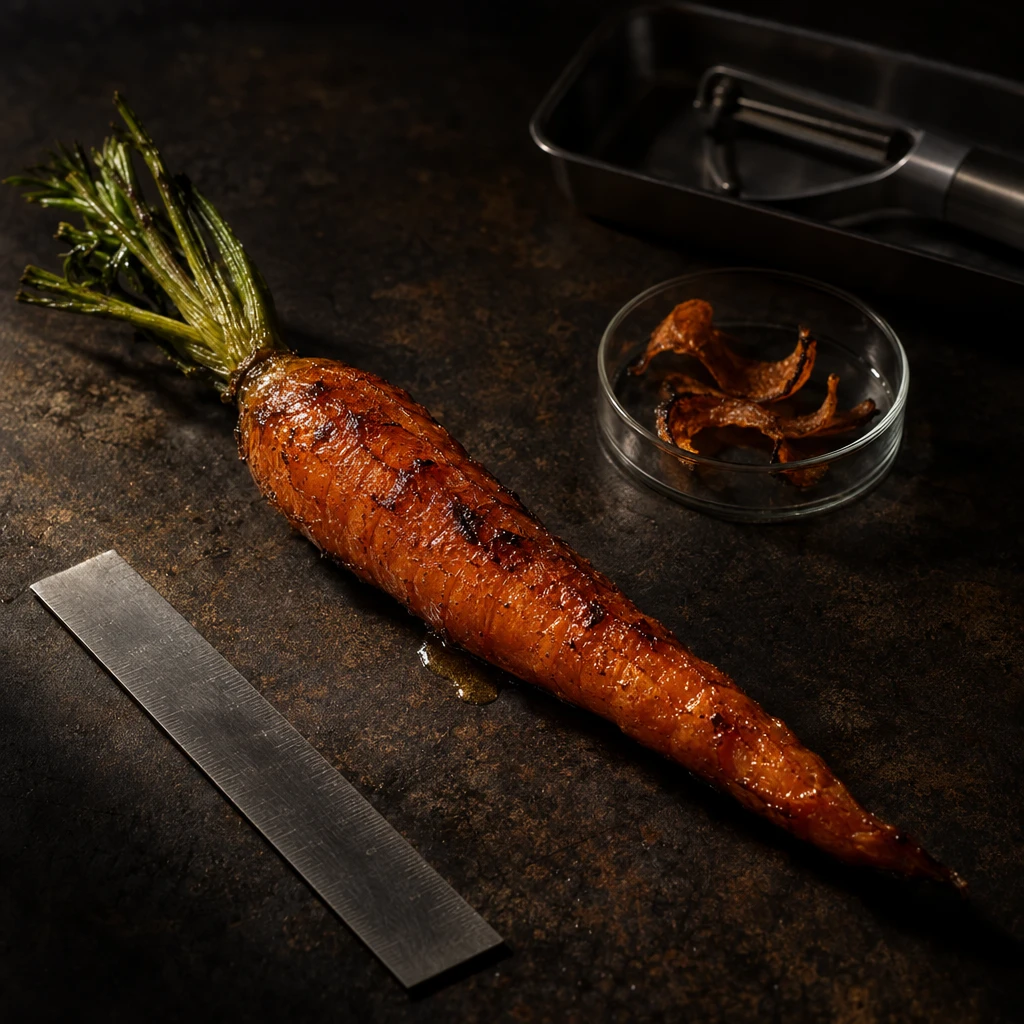
The vegetable peeler is a tiny trash generator that has somehow secured permanent drawer space. It waits beside the useful tools, wearing a little metal halo of legitimacy, prepared to shave flavor directly into the garbage.
And we let it.
We peel carrots until they resemble hotel furniture. We strip potatoes of their best crispy edges. We attack cucumbers as though the green part has committed fraud. Then we congratulate ourselves for producing vegetables that are smoother, paler, softer, and markedly less interesting.
Enough. Put down the peeler and step away from the compost bin.
The Prosecution Calls Its First Rind
The case for peeling is usually presented as self-evident. Skins are allegedly tough, bitter, dirty, or aesthetically unruly. This is not an argument. It is a list of promising characteristics.
Texture is not misconduct. A potato skin crackles. A cucumber skin snaps. The outer layer of a carrot carries earthy aroma and enough resistance to remind you that dinner was once alive. Uniform tenderness is not refinement. Sometimes it is merely surrender.
Consider the watermelon. Most people eat the pink center of a Watermelon, stop abruptly at the white rind, and discard the majority of the object with the confidence of a person who has never been cross-examined. Yet Gujarati cooking offers Watermelon Rind Shaak, where that supposedly useless rind becomes a spiced vegetable dish with its own gentle bite.
This is not a joyless sustainability substitution. Nobody is chewing damp cardboard to impress the municipal waste department. The rind works because it absorbs seasoning while keeping its structure. It is an ingredient, not penance.
Coastal Karnataka provides further damaging testimony with Watermelon Rind Dosa. Here the rind enters a batter and emerges as dosa, which is a considerably more glamorous fate than lying under coffee grounds in a countertop scrap bucket. Once a culture has turned your trash into breakfast, your definition of trash requires immediate review.
Peel Is a Flavor, Not a Clerical Error
We have been trained to see the outside of food as packaging. Nature, apparently, shipped every vegetable in an inconvenient wrapper and waited for us to invent swivel blades.
But skins and rinds often contain concentrated aroma, bitterness, chew, and color. Citrus peel can be dried and aged. Eggplant skin gives the flesh enough backbone to survive cooking. Squash skin can become tender, glossy, and sweet at the edges. These are not accidental bonuses. They are part of the food.
South Indian kitchens have long understood this. The peel of Ridge Gourd can be cooked into chutney rather than dismissed as fibrous debris. Make Taro Peel Chutney and the outer layer is no longer an obstacle between you and the vegetable. It is the source of the chutney’s character.
This is where peelers have done their greatest ideological damage. They have persuaded us that refinement means subtraction. Remove the skin. Trim the stem. Square the edges. Keep cutting until the ingredient looks as though it has never encountered weather.
What remains is certainly tidy. So is an empty plate.
Reasonable Exceptions, Grudgingly Entered
The anti-peeling movement is not a suicide pact. Some exteriors are genuinely inedible, unsafe, heavily waxed, damaged, or unpleasant beyond redemption. Produce should be washed. Taro and its peel must be handled and cooked properly. Pineapple armor is not a test of moral courage.
But these are exceptions, not blanket permission to flay every root vegetable on sight.
The better rule is simple: make the peel prove it deserves removal. Taste it. Cook it. Ask whether roasting will soften it, whether salt will tame it, or whether chopping will turn toughness into texture. Investigate before reaching for the blade like a tiny stainless-steel despot.
Southern cooks already settled this matter with watermelon-rind pickles. In Sweet and Sour Watermelon Rind, the pale layer beneath the green exterior takes beautifully to a sweet-sour brine. What looked bland becomes crisp, tart, and perfumed with spice. The part between fruit and refuse turns out to be the point.
That is the inconvenient truth hiding in the peel pile. Thrift can taste good. Bitterness can be useful. Chew can be pleasurable. A rind can carry a dish rather than merely survive it.
So let the peeler remain in the drawer, where it can contemplate its crimes. Your vegetables have already been skinned by nobody, which is exactly how they arrived. Give them the dignity of a fair trial before you start removing evidence.