The Tepary Ledger
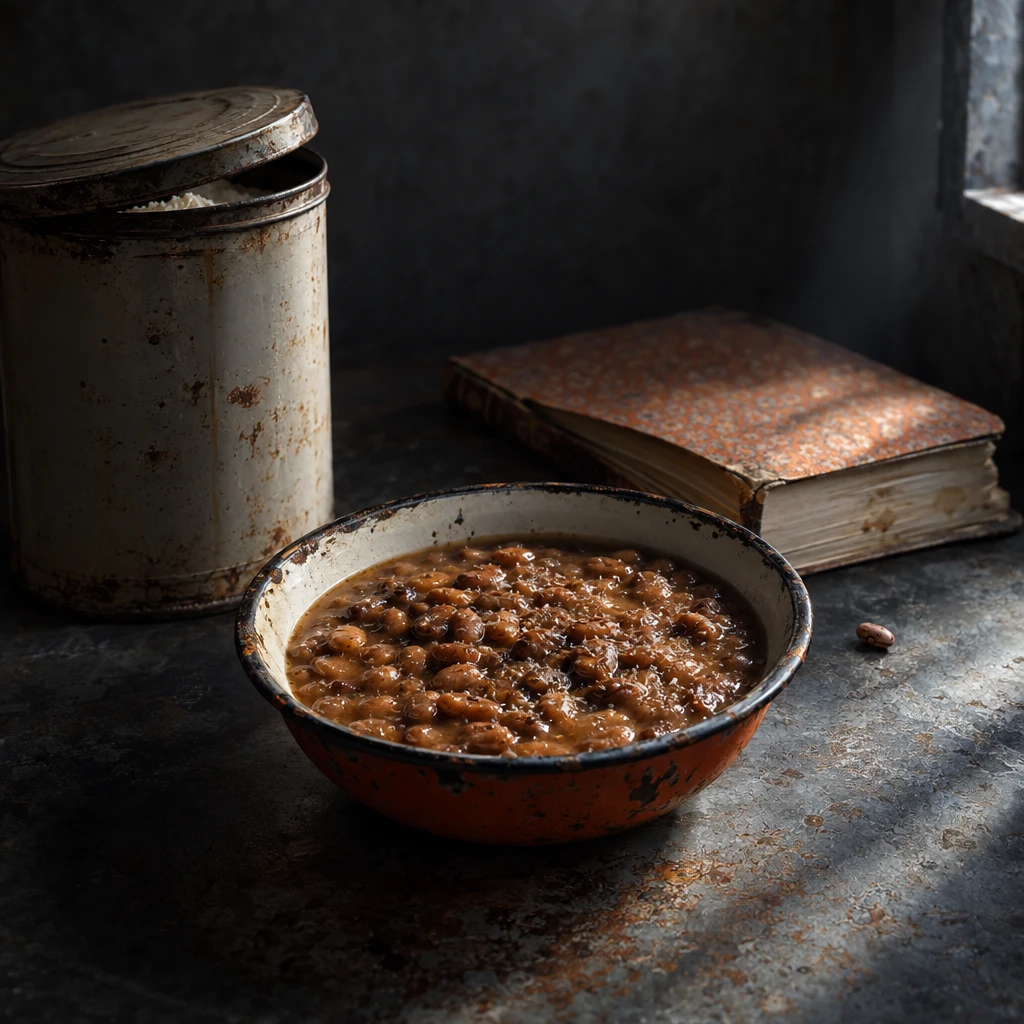
By first light the flies had found the pot.
They rose in a dark shimmer when Luz lifted the lid. Inside was Tepary Bean Pot, thickened to paste in the dawn chill, squash collapsed against the beans like it had given up arguing with the heat. The pot sat alone beside a dead fire ring in a wash fifteen miles north of the line. No blankets. No shell casings. No bodies.
Only food.
Luz touched the rim and swore under her breath. Her brother Tomás salted beans like that, a little too much, because he said sweat stole more than water. A stranger would have left canned tuna, jerky, something bought in a hurry. This meal belonged to somebody who knew the desert well enough to trust it.
Under the pot she found the ledger, wrapped in oilcloth and stained with orange bean broth. Deputy Bell had been asking about a ledger for three days, leaning on every counter from Nogales to Three Points, telling people it was evidence tied to smugglers. Bell asked questions the way men check fences, looking for weak wire.
The pages were full of columns with no names, only dish titles and hash marks. Beans. Nopales. Mesquite. Cholla. Drinks in pink pencil. Bell would see a code. Luz saw a pantry.
What the ledger was for
She drove straight to Inez Ríos, who ran a stand west of the highway and had forgotten more about desert plants than Bell would ever learn with a badge and a flashlight. Inez read two pages, then shut the book.
"Not money," she said. "People. Skill. Who can travel light. Who can clean a cactus without bleeding into it. Who knows what to pick when the wash goes bare. Your brother kept count because dead weight kills everybody."
She tapped a line headed with Charred Nopales Skillet.
"This means the Martínez windmill. Nopales everywhere. Sweet corn in summer from the little field if the pump still works. Three marks means three souls who knew how to use it."
Luz looked up. "And Tomás?"
Inez did not answer that one. She took her shawl, a dented canteen, and a sack of onions. When old women moved fast in that country, you did not ask for reasons. You followed.
Three stops
By noon they were at the windmill, its vanes frozen crooked against a white sky. Bell had gotten there first. His SUV had cut deep wounds into the sand and turned back east, toward the basalt hills. He had missed the sign hanging plain as laundry: a pile of singed cactus paddles, cleaned neat, and one blackened skillet cooling under the tower. Inez scraped the pan with her thumbnail, tasted the soot, and nodded.
"Tomás was alive here yesterday. He made Charred Nopales Skillet for at least four. One of them was hurt. Too much salt again. He was trying to keep somebody walking."
Bell had found the skillet and still learned nothing.
The next mark in the ledger was a circle dusted brown. Mesquite. That sent them west to the abandoned schoolhouse near Baboquivari, where the playground had long ago become a stand of ironwood and creosote. In the shade of a broken wall, Luz found crumbs wrapped in butcher paper, sweet and gritty on her tongue.
"Mesquite Flatbread," she said.
Inez smiled without humor. "Your brother's kind of breadcrumb. Men with guns leave brass. Men who expect women to find them leave flour."
There were tire tracks again, Bell chasing whatever treasure he thought the ledger promised. He was close now, close enough to turn dangerous in the stupid way. Luz pictured him with his city cooler full of melting ice, his gallon jugs gone hot, his certainty drying out faster than his mouth.
At the schoolhouse altar, where children once left valentines and now travelers left saints, somebody had set a glass bottle in a niche. A magenta ring clung to the bottom.
Tomás had carried Prickly Pear Agua every August when the fruit came in, saying the desert was stingy only with fools. He marked safe water with sweet things because desperate men ignored sweetness. Bell, looking for guns and cash, would walk right past a bottle stain.
The canyon
The ledger's last pages led them into a box canyon where the rock kept a little shade past evening. Bell was there already, shirt open, face burned purple, one boot sunk to the ankle in a dry tank he had mistaken for a spring. He leveled his pistol when he saw them, but his hand shook so badly the barrel described little circles in the air.
"Where is it?" he rasped.
Inez looked at the gun the way she might look at a broken rake. "You mean where are they."
Bell blinked, slow and angry. He had never understood there was no stash, only a route. No cartel ledger. No payoff. Tomás had been keeping a record of who could survive the crossing without turning the desert into a graveyard for everybody else.
From the ledge above them came a voice rough with thirst.
"Luz."
Tomás stepped out of the shadow with two migrants behind him, one limping, all three dusty but upright. Beside them, spread on a flat stone to dry, were trimmed buds for Cholla Bud Salad. Food for the next morning. Proof they had lasted another day.
Bell swung the pistol toward the sound. Then his knees buckled. The desert made the decision for him before anybody else had to. The gun dropped into the dust. No one hurried to pick it up.
Kept in the kitchen
Later, after dark, they ate the last of the beans cold from the pot Luz had carried back out, and Tomás turned the ledger's stained pages by firelight. He did not write names. He wrote capacities. Who knew water by cottonwood roots. Who could strip a cholla. Who would share. Who would lie.
At the end he handed the book to Luz.
"Keep it in the kitchen," he said. "That's where men like Bell never think to look."
She slipped it beside the flour tin, where any fool would see a household and only the hungry would understand it was a map.