Tucson Eats Like the Desert
The first thing Tucson gives you is not heat. It is dryness, a sharp clean edge in the air that makes coffee taste darker and lime taste brighter. By breakfast, the city already feels tuned to survival: shade chosen carefully, water carried everywhere, tortillas kept close. You can eat very well here in restaurants, of course, but the more revealing meals are often the ones that seem almost ordinary at first glance. A skillet of cactus. Squash softened with onion and cheese. Beef preserved because the climate makes preservation make sense.
Tucson is often flattened into taco shorthand. The tacos are real, and often excellent. But locals eat from a pantry shaped by the Sonoran Desert and the borderlands, where ingenuity is not a trend word but a daily habit. The food tastes of restraint and resourcefulness, of ingredients that hold onto water, tolerate heat, or keep for a long time.
The desert starts with plants
In many cities, vegetables arrive as a side note. In Tucson, desert plants often set the tone. A glass of Prickly Pear Agua is the easiest way to understand this. It carries that deep pink color tourists love, but the flavor matters more: floral, softly melon-like, a little earthy, never quite as sweet as it looks. Prickly Pear is one of those ingredients that reminds you the desert is not barren. It is selective.
That same lesson shows up on the plate with Charred Nopales Skillet. Good Nopales have a tart, green flavor that lands somewhere between green bean, asparagus, and something entirely their own. In Tucson, cactus is not a novelty ingredient trotted out for visitors. It is breakfast with eggs, lunch folded into a tortilla, dinner cooked down with chiles until the edges catch a little color. Char them, and the plant takes on smoke without losing its snap.
Then there are cholla buds, one of the ingredients that tells you immediately whether a city’s food really belongs to its landscape. Cholla Bud Salad tastes quietly local, the sort of dish that never needed branding because it already had a place. The buds have a gentle asparagus-like bite and a faint desert tang. Tossed with herbs or seeds, they make the point better than any brochure could: Tucson’s foodway is built from what this place has always offered, not just from what could be shipped in.
Everyday cooking, borderland logic
The most convincing Tucson meals are often the least theatrical. You see it in calabacitas, the kind of dish that turns squash, onion, chile, and cheese into something more complete than the sum of its parts. Zucchini with Cheese is home cooking in the best sense: practical, generous, deeply flavored without trying to prove anything. A little Anaheim Pepper brings mellow heat. Crumbles of Queso Fresco soften into the vegetables. If there is Fresh Epazote nearby, its resinous green note makes the whole pan smell like summer after a hard dry day.
This is where Tucson’s borderland character becomes clearest. The city’s cooking is not an exhibit of “influences.” It is a living regional language, shaped by Mexican traditions, Indigenous knowledge, ranch cooking, and the realities of desert life. Wheat tortillas matter here. So do dried chiles, beans, squash, and seeds. So does the habit of making a little go far.
A few patterns show up again and again:
- Acid and char to brighten sturdy plants
- Cheese and squash used for substance, not decoration
- Small hot chiles, like chiltepin, that deliver clean, quick fire
- Preserved meats and pantry staples built for heat, distance, and time
None of this feels museum-like. It feels lived in.
What the air does to the food
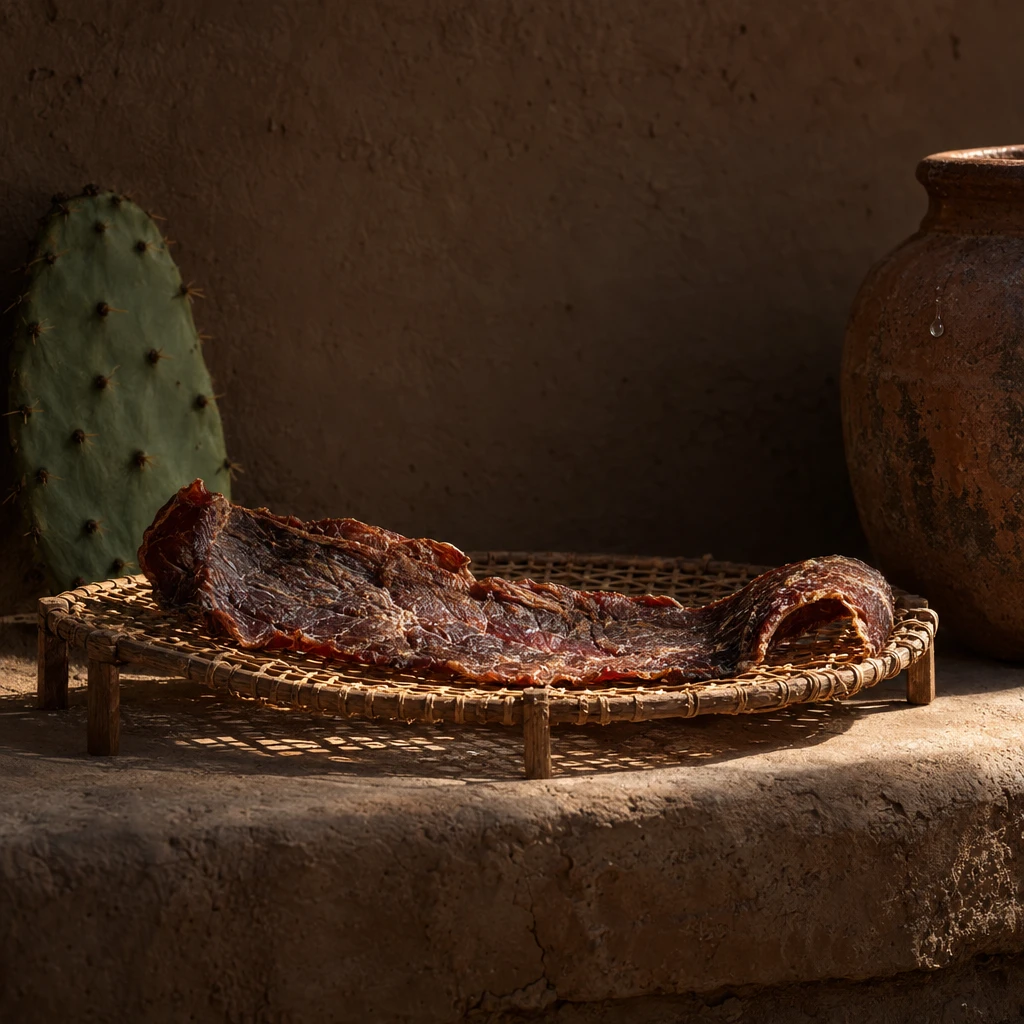
No dish explains Tucson’s climate more directly than carne seca. Dry air is not just weather here. It is part of the kitchen. Historically, beef could be salted and dried in conditions that made preservation possible, then shredded, crisped, and tucked into all kinds of meals. Carne Seca Skillet carries that history into the present. The meat is concentrated, savory, almost mineral in its depth, especially when cooked with egg, chile, or tomato. carne_seca tastes like a method turned regional identity.
This is the kind of food that helps correct the way outsiders often eat a city. Visitors want the signature order, the famous table, the line out the door. Locals, meanwhile, are often eating dishes that make more intimate sense: cactus because it belongs here, squash because it stretches, dried beef because the climate once demanded it and the flavor still earns its keep.
Tucson’s best food is not trying to escape the desert. It is in conversation with it. The bright pink drink, the tart paddle of cactus, the cholla bud gathered from a stubborn landscape, the skillet of beef made durable by dry air, the soft comfort of squash and cheese. Together they form a grammar of place.
And that may be the truest way to eat Tucson. Not by chasing a greatest-hits list, but by noticing how often the city answers the same old question, plate after plate: What can this land give us, and how good can we make it taste?