Following Tamarind Across India, Southeast Asia, and Mexico
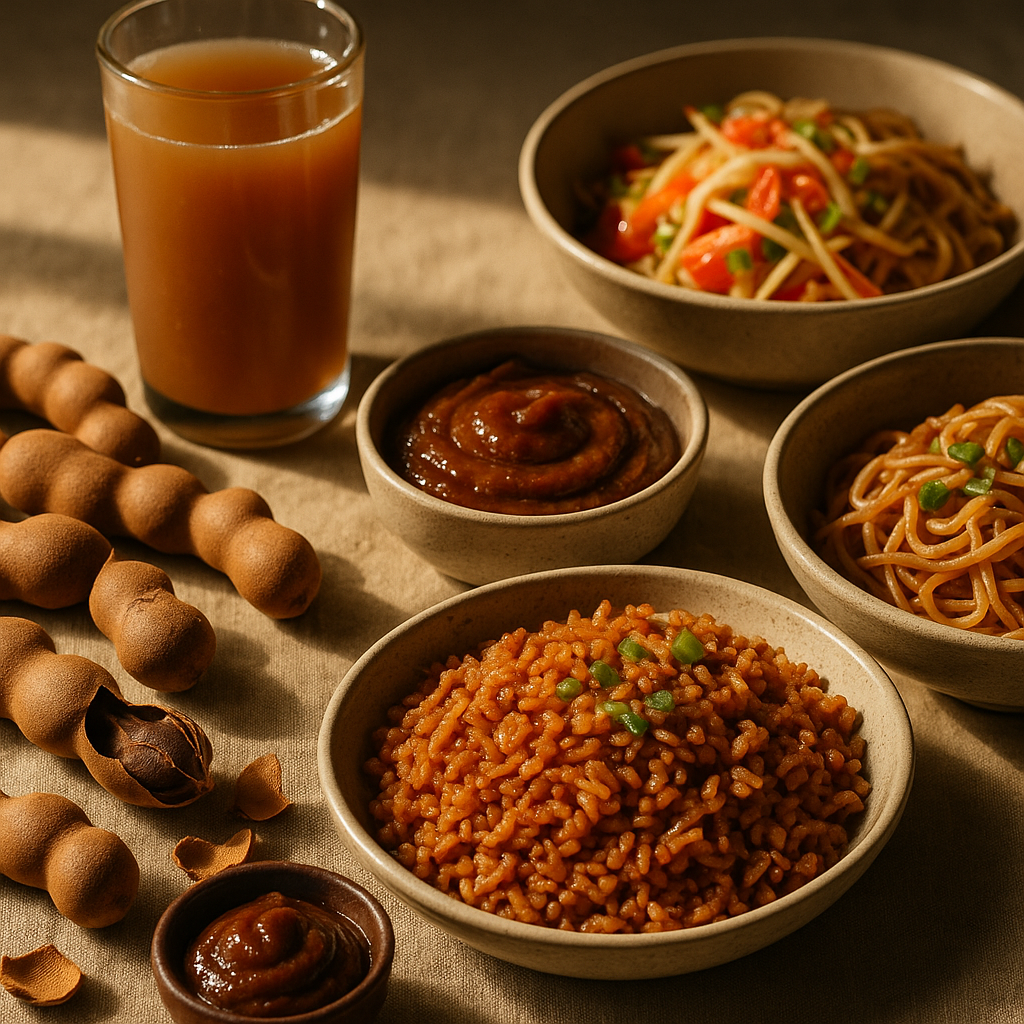
Sourness is usually the first thing people say about tamarind, but it is not the whole story. Tamarind arrives dark, sticky, and a little severe, then opens into something broader: fruity, deep, almost smoky, with a sweetness that never quite lets the acid take over. It is the kind of ingredient that can anchor a dish without calling attention to itself. That may be one reason it has traveled so well.
Across warm-weather trade routes, tamarind moved as a pod, a pulp, a paste, and eventually a memory. It appears in South Asian temple cooking, in Southeast Asian street food, in Mexican market drinks and candies. The forms keep changing. The signal does not. A spoonful of Tamarind or Tamarind Paste can make a new kitchen taste like an old one.
A pod built for travel
Tamarind’s spread was never a straight line. The tree is native to Africa, but it took root early in South Asia and became so embedded there that many people assume it began in India. From there, trade and migration carried it across the Indian Ocean and into Southeast Asia, where it settled into everyday cooking with remarkable ease. Later, Spanish colonial routes helped move it into the Americas, including Mexico, where it found another climate ready to receive it.
What makes tamarind so portable is not just that it keeps well. It is that it survives translation. It can be soaked and strained, pounded into sauces, cooked down with sugar, folded into broths, or pressed into candy. Even when the surrounding pantry changes, tamarind still brings structure. It sharpens starches, balances fat, and gives sweetness a backbone.
In South India, that logic is clear in Puliyodharai. Tamarind is not a decorative note there. It is the architecture of the dish, cooked with spices and often scented with Curry Leaves until the rice carries sourness in every grain. This is practical food, travel food, temple food, lunchbox food. Tamarind does more than flavor the rice. It preserves it slightly, steadies it, makes it feel complete.
North India uses tamarind differently but no less meaningfully. With Punjabi Samosa, tamarind often arrives as chutney, darker and sweeter, a glossy counterpoint to hot pastry and spiced filling. Same fruit, different job. In one setting it saturates rice; in another it cuts through fried food. That flexibility is part of its cultural endurance.
Sourness with a passport
Move east and tamarind starts speaking in new combinations. In Thailand, it is one of the great balancing agents, especially when sweetness, salinity, and heat all need to stay in motion at once. In Pad Thai, tamarind works with Fish Sauce, sugar, and noodles to create a sauce that feels lively rather than loud. The point is not simply “sweet-sour.” It is tension, held just long enough to keep each bite bright.
That same intelligence appears in Som Tam, where the dressing turns shredded Green Papaya crisp and urgent. Tamarind is only one part of the equation, joined by lime, chiles, and often Dried Shrimp, but it gives the salad a rounder sourness than citrus alone can manage. It stays on the palate a little longer. It makes the salad feel less like a spark and more like a conversation.
In the Philippines, tamarind can move from sharp condiment logic into comfort. Pork Sinigang is a broth built around sourness, but it does not eat like an aggressive dish. It is warming, domestic, almost gentle. Tamarind here is not there to jolt. It is there to gather the pork, vegetables, and broth into a flavor that feels steady and familiar. This is one of tamarind’s quiet talents: it can make a dish taste vivid and settled at the same time.
Home, translated
By the time tamarind reaches Mexico, it has entered yet another vernacular. It shows up in sweets, glazes, snacks sold near school gates, and in the cold, deeply refreshing pull of Tamarind Water. Sweetened with sugar or sometimes piloncillo, the drink keeps tamarind’s edge intact. It does not try to tame the fruit into something bland. Instead, it makes that tartness easy to drink, especially in heat.
This is where tamarind becomes especially interesting as a cultural marker. It rarely remains pure in the nostalgic sense. People adapt it to what is available, affordable, and local. A cook reaches for a block of concentrate instead of whole pods. A family prefers it sweeter, saltier, looser, darker. Street vendors turn it into candy. Home cooks turn it into broth. Restaurants turn it into a signature sauce. None of these uses cancel the others out.
That is the deeper story of pantry migration. Ingredients survive because they are not rigid. Tamarind crosses borders by accepting new partners, new textures, new expectations. Yet wherever it lands, it still announces the same essential thing: this dish understands that sourness can be sustaining.
You can taste that continuity in a spoonful of rice, in a noodle sauce, in a salad mortar, in a soup bowl, in a glass beaded with condensation. Tamarind changes costume constantly. The voice underneath remains unmistakable, dark and tart and oddly comforting, still calling a faraway kitchen into the room.