One Blender, Four Jobs: Epis, Green Seasoning, Chermoula, and Recado Rojo
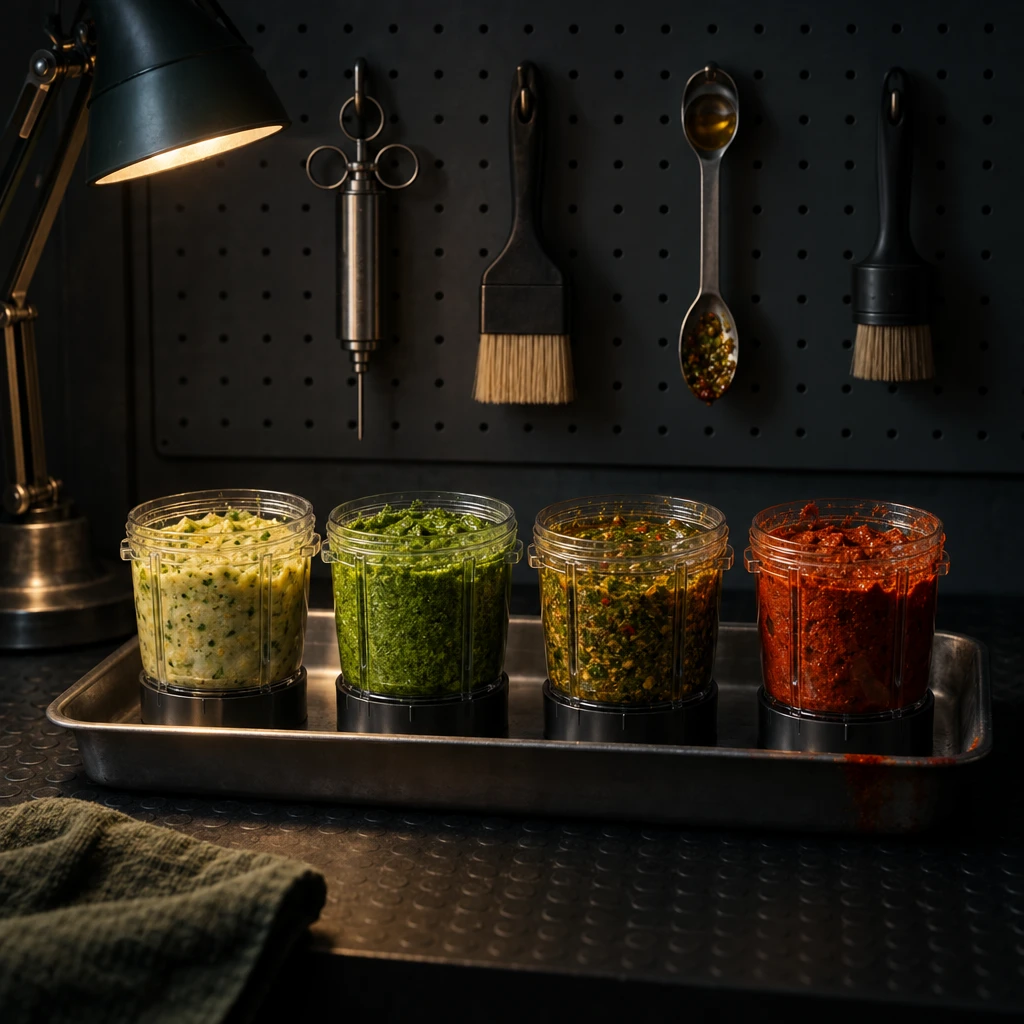
Set four jars on the counter and they can look like cousins.
One is leafy and sharp. One is greener, louder, almost grassy. One smells of cumin and lemon. One is brick red and looks ready to stain everything it touches. Blend them all and a home cook might file them under the same lazy label: flavor paste.
That is where dinner starts going sideways.
These mixtures are not interchangeable shortcuts. They are different tools with different instincts. Haitian epis is built to wake up meat before heat. Trinidadian green seasoning acts like a house accent you keep returning to. Chermoula is unusually flexible, happy as marinade and finishing sauce. Recado rojo is deeper and more architectural, a paste meant to perfume, color, and roast.
Four jars, four intentions
Start with Haitian Epis Vert. It usually carries herbs, peppers, garlic, onion, and acidity, and it moves with a clear purpose: season first, then cook. It penetrates. It freshens. It gives meat a head start. In dishes like Griot, epis is not an optional flourish at the end. It is part of the foundation, the thing that makes pork taste seasoned all the way through rather than merely coated.
Trinidadian Green Seasoning is also a blender blend, but its personality is broader. Think of it as a refrigerator regular, not a one-dish specialist. It often leans on scallions, thyme, garlic, peppers, and especially culantro, sometimes sold as Fresh Culantro, which gives it that deep, assertive, almost metallic green note. Green seasoning can sit on chicken, go into stews, and quietly support weeknight cooking. In Curry Chicken Roti, it behaves less like a final flavor bomb and more like a steady bass line under the curry.
Chermoula enters from a different angle. The herb blend is familiar enough, but the frame is not Caribbean pantry logic. It is North African, often carrying cilantro, parsley, garlic, cumin, paprika, olive oil, lemon, and sometimes Preserved Lemons. The key difference is range. In Chermoula Grilled Fish, chermoula can season the fish before cooking and return to the plate afterward, tasting fresh, acidic, and alive.
Then there is Red Recado. It is the outlier visually and functionally. Rather than reading as “green,” it announces itself with annatto and warm spices. This is not a loose herb sauce for spooning over something delicate. It is a paste built for contact with heat and fat, for staining roasts and perfuming the inside of the oven. If epis whispers freshness and chermoula flashes brightness, recado rojo settles in and darkens the room.
What they do once heat arrives
A useful comparison is to ask a blunt question: What happens after the blender?
- Epis wants time with the main ingredient before cooking.
- Green seasoning wants a long life in the fridge and many small jobs.
- Chermoula wants two moments, before and after heat.
- Recado rojo wants roasting, braising, or another method that lets its color and spice bloom.
That means the same chicken thigh will not respond to all four in the same way.
If you rub it with epis, you get penetration and perfume. If you use green seasoning, you get a more all-purpose savory frame, especially helpful when the rest of the pot is doing heavy lifting. If you use chermoula, you get a sharper top note and a sauce-like finish. If you use recado rojo, you get depth, color, and a sense that the seasoning has fused with the cooking fat.
Texture matters too. Epis and green seasoning are often looser, made to move around ingredients. Chermoula can be loose or spoonable, depending on the oil. Recado rojo is the most paste-like of the group, which is part of why it clings so well to meat.
How to choose at 6 p.m.
When home cooks ask which one to make, they are usually asking a different question: What kind of dinner am I trying to build?
Choose epis when you want the seasoning to feel internal, especially with meat that benefits from marinating.
Choose green seasoning when you want a jar that can solve three dinners this week without becoming repetitive.
Choose chermoula when you want brightness to survive the trip to the table.
Choose recado rojo when you want the seasoning to leave a mark, on the food and on the pan juices.
The common mistake is substitution by color. A green blend is not automatically another green blend. Even heat works differently inside them. A Scotch Bonnet in green seasoning does not behave like preserved lemon in chermoula, and neither is trying to do the work of annatto in recado rojo.
Put another way, the blender is the least interesting thing these jars have in common.
What matters is the job each one was built to do. Once you cook with them that way, the false category of “green sauce” falls apart, and dinner gets much more specific. That is usually where the good stuff starts.