The People v. Fermented Bean Pastes
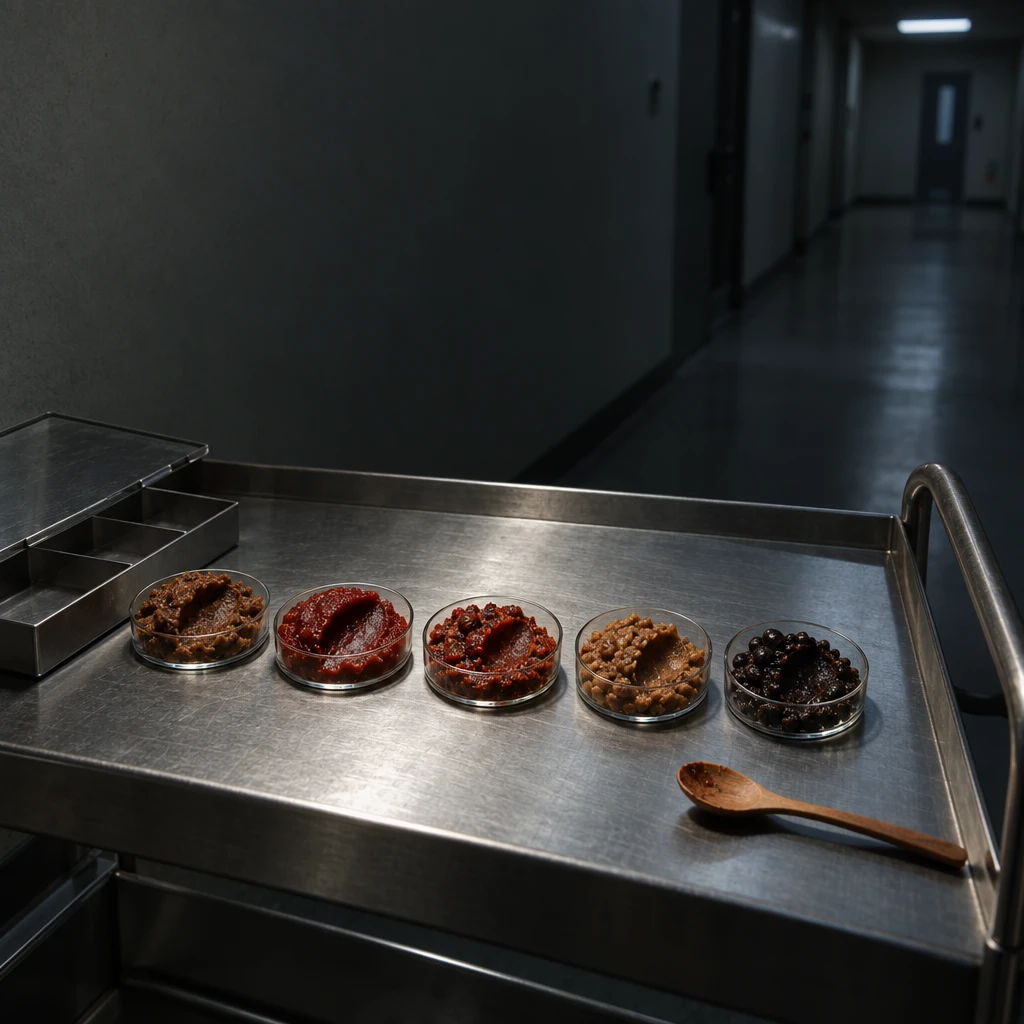
Arraignment
BAILIFF: All rise. The Court of Weeknight Cookery is now in session, the Honorable Judge Mireille Salt presiding.
JUDGE SALT: Be seated. Clerk, call the matter.
CLERK: Docket 11-86. The People v. Fermented Bean Pastes. The defendants, namely Doubanjiang, Doenjang, Gochujang, Fermented Black Beans (Douchi), and tauco, stand accused of presenting themselves to the home cook as one broad, muddy category known in internet shorthand as “an umami bomb.”
A soft scandal passed through the gallery.
PROSECUTOR ADA REED: Your Honor, the People will show that these pantry items are routinely treated as swap-friendly blobs. Red paste, brown paste, salty paste, close enough. A spoon here, a spoon there. The result is culinary negligence.
DEFENSE COUNSEL MR. HAN: The defense stipulates only that ignorance exists. We do not stipulate that the defendants are interchangeable. On the contrary, each has a job, a texture, a history, and, if the Court pleases, a temperament.
JUDGE SALT: Temperament will be admitted if properly founded. Proceed.
The People’s Case
PROSECUTOR REED: The People call Ms. Clara Penn, home cook.
PENN: I had a recipe open on my phone. It asked for something fermented and savory. I had three jars. I picked one.
REED: Which one?
PENN: I do not know. The labels were beautiful and unhelpful.
REED: And what happened?
PENN: What was meant to be a bright pan of green beans became a murky, sticky event.
REED: Let the record reflect that the witness is referring to Exhibit A, Dry-Fried Green Beans.
MR. HAN: Objection. “Murky event” is editorializing.
JUDGE SALT: Overruled. It is vivid and therefore useful.
REED: Did anyone in your household enjoy the result?
PENN: The dog showed professional restraint.
Laughter in the gallery.
REED: The People next call Mr. Leon Voss, grocer.
VOSS: Customers ask me, "What’s the difference?" and they mean between everything. They point at Black Bean Sauce and Fermented Black Beans (Douchi) as if sauce and bean were a distinction without a difference. They hold up Red Miso Paste and say, "Near enough to doenjang, right?"
REED: Is it near enough?
VOSS: Near enough for an argument, not for a pot.
REED: No further questions.
MR. HAN: Cross-examination. Mr. Voss, if confusion exists, does that prove sameness?
VOSS: No.
MR. HAN: Does a violin become a cello because a beginner stores them badly?
REED: Objection.
JUDGE SALT: Sustained. Counsel will leave the orchestra out of it.
The Defense Calls Experts
MR. HAN: The defense calls Chef Yun Park, specialist in Korean home cooking.
PARK: Doenjang is not gochujang in a different mood. Doenjang, as in Exhibit B, Doenjang Jjigae, is broad, deep, salty, a little rugged. It clouds a broth on purpose. It is the floorboards of the stew. Gochujang, by contrast, brings chile heat, sweetness, body. In Exhibit C, Gochujang Salmon Tray, it glazes and clings. It wants the oven, the caramelized edge, the lacquer.
REED: Could a cook swap one for the other?
PARK: A cook may do many things. The law is not the question. The result is.
MR. HAN: And sundubu?
PARK: In Exhibit D, Sundubu Jjigae, the paste is not the same engine as in doenjang jjigae. Soft tofu needs a different kind of push. If you confuse the two, the stew tells on you immediately.
REED: So your testimony is that they are all distinct.
PARK: My testimony is that they are not waiting around to be reduced to a vibe.
MR. HAN: The defense calls Ms. Linh Ortega, fermentation researcher.
ORTEGA: Doubanjiang carries heat and fermented bean depth, yes, but also a particular minerality and chile structure. It blooms in oil. It stains the whole pan with intent. In Exhibit E, Mapo Tofu, you need that red, that savor, that ferocious little hum. Douchi, or Fermented Black Beans (Douchi), is different. Beans remain legible. Salty bursts, not uniform paste. Chopped and scattered, they punctuate.
REED: Yet both are fermented bean products.
ORTEGA: As grapes and vinegar are both grapes, if the People insist on category as destiny.
JUDGE SALT: Nicely put. The Court will allow it.
MR. HAN: Final witness, Mr. Arif Santoso, cookbook author.
SANTOSO: tauco is often treated like a substitute benchwarmer, and that is a disgrace. Tauco is looser, beany, salty in a different register, often visibly textured. In Exhibit F, Tauco Chicken from the Oven, it seasons through the roast rather than merely sitting on the surface. It is not trying to be doubanjiang. It is not trying to be doenjang. It has its own passport.
REED: But if a cook wants depth quickly, any of these can help.
SANTOSO: So can garlic. You do not therefore replace cinnamon with garlic and call it pragmatism.
Closing Arguments and Verdict
PROSECUTOR REED: The People do not deny nuance. We charge, instead, that these defendants enter the average pantry under cover of similarity. Brown jars. red tubs. salty funk. The home cook is overwhelmed, and weeknight dinner suffers.
MR. HAN: What stands accused today is not the defendants but careless language. “Umami bomb” is the slander. It turns distinct traditions into one muddy shortcut. These are not duplicate files in a digital folder. They are working ingredients with specific conduct in heat, oil, broth, and time.
JUDGE SALT: The Court is prepared to rule.
On the count of being interchangeable, the defendants are found not guilty.
On the count of requiring the cook to learn what they do before waving a spoon at the pot, the defendants are found emphatically guilty, and so is everyone in this room.
Sentence is as follows:
- Doubanjiang shall return to the skillet where it belongs.
- Doenjang shall remain the backbone of stew, not a generic salty paste.
- Gochujang shall be spared the indignity of being described merely as “spicy miso.”
- Douchi shall not be confused with bottled black bean sauce.
- Tauco shall be granted full recognition as its own thing.
Court is adjourned.
The gallery rose in a rustle of notebooks and grocery lists. Out in the corridor, five jars sat in the evidence cart, innocent as saints, each waiting for the right dish and the right cook to call its proper name.