Skip the Resort Buffet: Haiti’s Fritay Trail in 5 Dishes
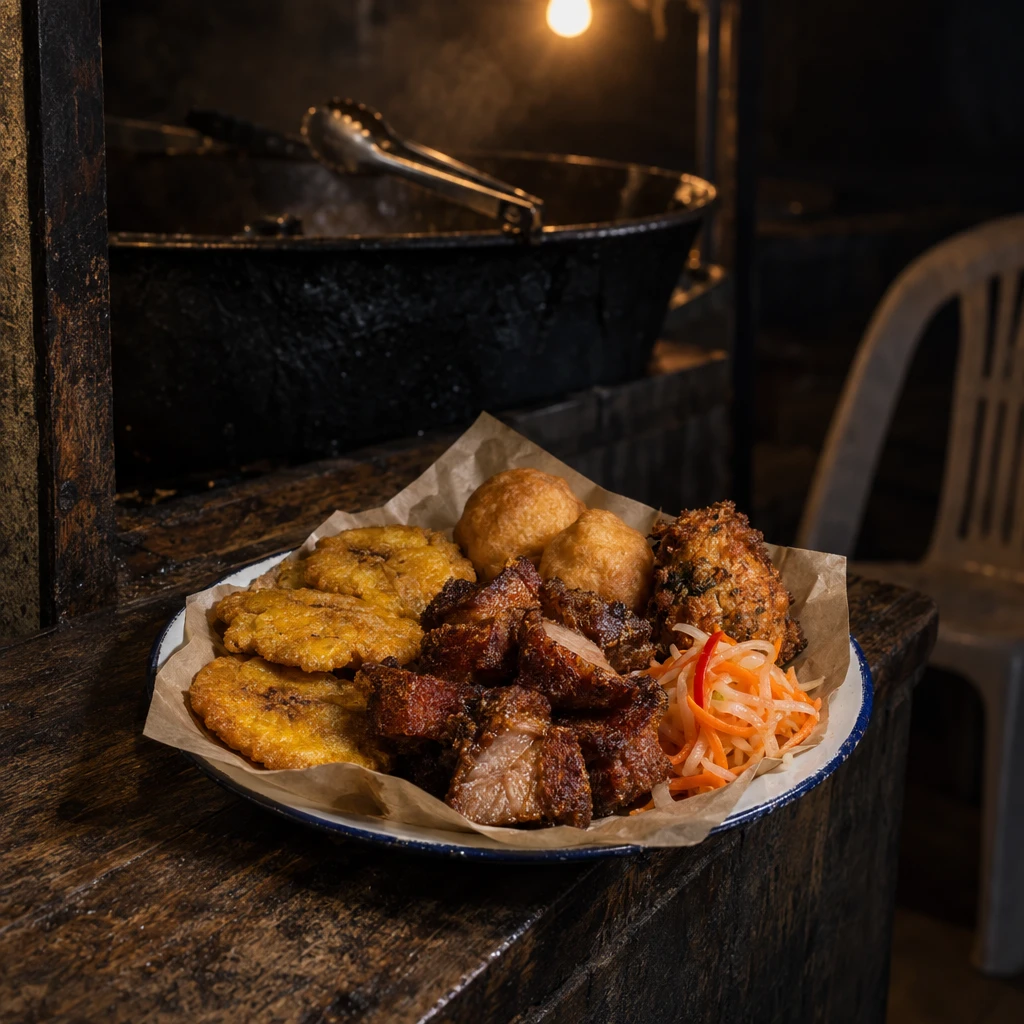
By the time the oil starts talking, the street has already made up its mind about dinner.
A fritay stand in Haiti does not announce itself with polished branding or a grand menu. It announces itself with heat, smoke, the rattle of metal tongs, and the smell of marinade catching on the edges of a pot. People drift toward it with the kind of certainty that matters more than a recommendation list. If you want to understand what locals actually crave, skip the buffet line and follow that crowd.
Fritay is not one dish. It is a way of eating and, just as important, a way of gathering: quick, public, sharp with vinegar, generous with spice, built around what fries well and satisfies fast. You eat standing up, or half-perched on a plastic chair, or from a paper-lined plate balanced on your knee. The meal is hot, loud, and vivid. It tells you more about appetite than any formal “national cuisine” tour ever could.
Start Where the Oil Is Deepest
The anchor is often Griot, pork that has been seasoned, cooked until tender, then fried until the edges turn dark and crisp. It is one of those dishes that teaches you to stop separating texture from flavor. The crust matters, but so does the citrus bite underneath, often from sour_orange in the marinade, and the warm bass note of spices that can include Allspice. You taste patience first, then fire.
No one sensible eats griot alone. It arrives with Pikliz, the bright, ferocious tangle of pickled cabbage, carrots, onions, and chiles that snaps the whole plate into focus. If griot is richness, pikliz is correction. It cuts, wakes, clears, and then invites another bite. The heat is not there to show off. It is there to keep the meal moving. The best versions taste alive with vinegar, sometimes the clear sting of Vinegar Cane, and the fruity edge of Scotch Bonnet.
That pairing tells you nearly everything about fritay culture:
- fried food is expected
- acid is mandatory
- balance is nonnegotiable
This is not indulgence for its own sake. It is a calibrated pleasure.
Pressed, Fried, and Passed Across the Counter
Then come the starches, which in a fritay setting do more than fill the plate. They absorb juices, carry condiments, and make the meal feel complete. Pressed Plantains is the obvious lesson. Fried plantains are flattened and returned to the oil, becoming crisp at the edge and soft in the middle, sturdy enough to scoop up stray shreds of pikliz. When you see how quickly they disappear, you understand why Plantain is less a side ingredient than a daily language.
There are also fritters, and this is where the stop starts to feel like a catalog of craving. Akra Malanga brings a different kind of satisfaction: grated root vegetable, herbs, seasoning, all turned into irregular golden bites with lacy, crackling edges. Good akra should feel light in the hand and deeply savory once you bite in. It is easy to call them snacks, but that misses the point. They are portable proof that comfort food does not have to be heavy. With malanga, Haiti turns another humble staple into something celebratory.
And then there is Marinade, those puffed, savory bits of fried dough that seem simple until you notice how quickly everyone reaches for one. They can frame a larger plate or become the thing you nibble while waiting for everything else. In another context they might be treated as filler. At a fritay stop, they are part of the rhythm: hot, airy, slightly chewy, ready for a swipe of pikliz or a bite alongside griot.
What Locals Actually Eat
Travel writing loves a signature dish because it makes a place easy to summarize. Fritay resists that. It asks you to pay attention to combinations, to appetite in motion, to the way ordinary evenings are built from many small decisions. What is frying now? What looks best after sunset? How much heat do you want tonight? Who is ordering extra pikliz?
That is why fritay works so well as a lens on Haiti. It is not staged for visitors. It is practical, social, and unapologetically tuned to local taste. You see the architecture of the meal in real time: pork for depth, pickles for brightness, plantains for body, fritters for contrast, dough for comfort. You also see a cuisine that understands something many resort buffets flatten into sameness, that big flavor does not need a grand presentation.
A good fritay stop leaves you with a clean lesson. Haitian food is not defined by one headline dish or one holiday table. Sometimes it is best understood under a bare bulb, with the air smelling faintly of smoke and vinegar, while someone beside you debates whether the pikliz is hot enough. The plate in front of you is crisp, sour, tender, and urgent. You do not need a survey course. You need five dishes, a place to stand, and the appetite to follow the line.