Steam Is Better Than Fire, and I’m Tired of Pretending It Isn’t
The skillet lobby has had us in a chokehold for years.
Everywhere you look, people are whispering the same smoky nonsense: get a hard sear, chase the char, blister it, blacken it, really show that zucchini who’s boss. We have somehow decided that a dinner only counts if something in it was aggressively threatened. This is deranged behavior. Not every ingredient wants to be bullied by a hot pan. Some ingredients would prefer dignity. Some ingredients would like a tight lid and a little peace.
Steam, meanwhile, is treated like a consolation prize. Steam is what people mention in the same tone they use for orthodontic retainers and sensible walking shoes. Steam is supposedly pale, timid, virtuous. Steam is what you do when fun has left the building.
Wrong. Steam is elegant. Steam is efficient. Steam is one of the smartest things a cook can do, and the cult of fire has made everyone stupider.
I. The cult of char is not a personality
Let us say the quiet part out loud: browning has become a crutch.
Yes, Maillard reactions are delicious. Congratulations to science. But the modern home cook has taken one useful idea and turned it into a state religion. If a little color is good, then more color must be better. If golden is appealing, then blackened must be profound. This is how you end up with fish that tastes mostly like the pan and vegetables that seem to have gone through a difficult divorce.
Steam asks for restraint, which is perhaps why so many people distrust it. Restraint is not glamorous on camera. A lid does not hiss with the same macho self-importance as a cast-iron skillet. But lift that lid over Chawanmushi and tell me, with a straight face, that you are looking at compromise. You are looking at control. You are looking at texture so fine it barely seems cooked at all, just transformed. Fire cannot do that. Fire can posture. Steam can whisper and still win.
The same goes for Har Gow. That translucent wrapper is not showing off. It is demonstrating technical superiority with the calm of a person who does not need to raise their voice. You do not bully shrimp into delicacy. You guide them there.
II. Steam respects the ingredient, which is more than I can say for most of us
There is a difference between cooking something and mugging it.
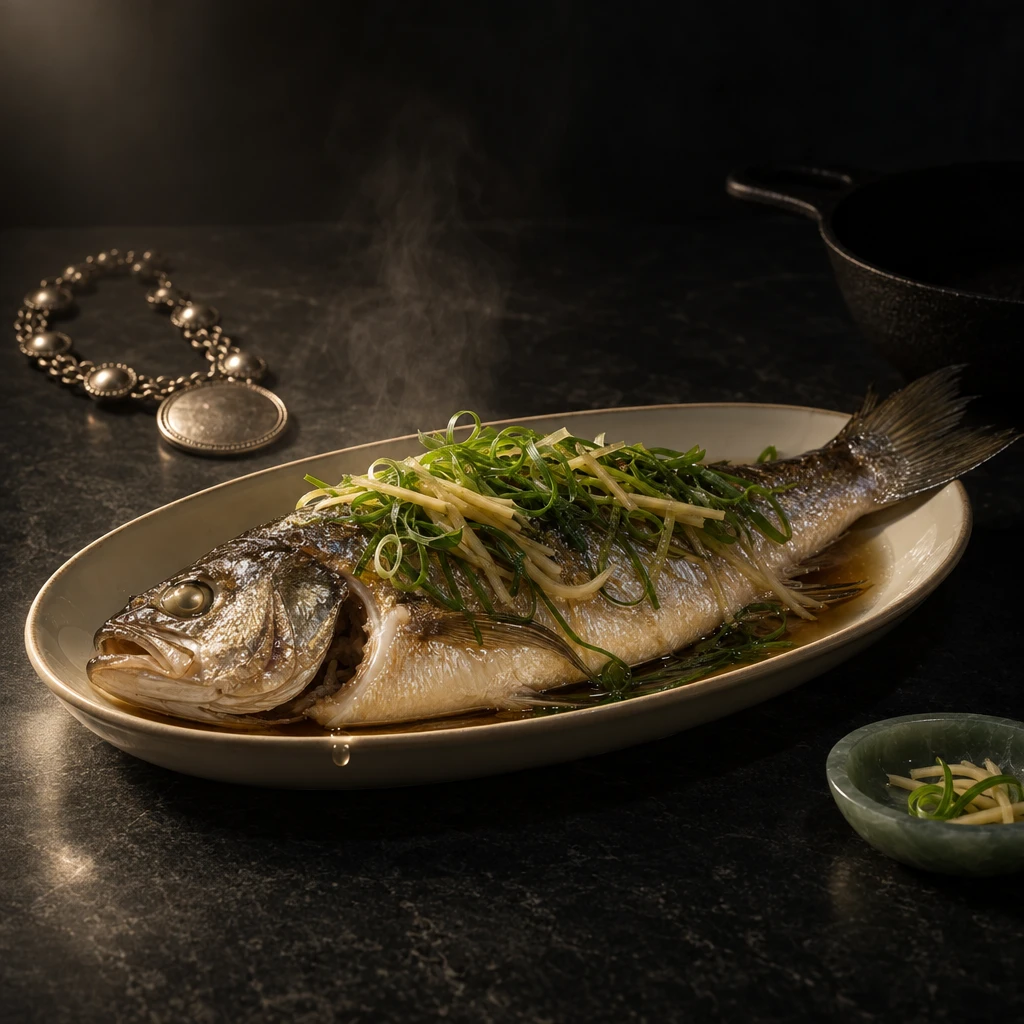
A whole fish is the perfect test case because fish suffers fools immediately. One distracted minute too many over high heat and you have dryness, sticking, flaking, the whole sorry pageant. But put Whole Sea Bass on a platter with Fresh Ginger and Spring Onions, set it up for Steamed Sea Bass, and suddenly the logic of steam becomes embarrassingly obvious. Vapor carries heat gently. The flesh stays plush. The aromatics actually taste like themselves instead of like the memory of smoke.
People who dismiss steamed fish as plain are confessing, perhaps unknowingly, that they only recognize force. They think flavor arrives by violence. It does not. Sometimes flavor arrives by concentration, by moisture, by allowing the ingredient to remain itself long enough for you to notice it.
And before anyone starts muttering that steam is somehow joyless, I invite them to unwrap a proper Pork Tamales made with Dried Corn Husks and explain where exactly the deprivation is hiding. In the tender masa? In the fragrant filling? In the fact that the entire dish depends on trapped vapor doing patient, exacting work? Tamales are not sad. Tamales are proof that steam has range, memory, and swagger.
III. Efficiency is not boring, it is civilized
Here is another thing the fire fundamentalists do not want to hear: steam is practical in a way that should make us all more loyal to it.
It stacks. It multitasks. It does not perfume your entire apartment with the smell of scorched oil and personal error. You can line up tiers of dumplings, buns, vegetables, custards, and call it dinner without turning the kitchen into a smoke event.
And steam is old in the best way. It is not some wellness rebrand. It is not culinary penance. It is one of the great cross-cultural expressions of intelligence in cooking. Consider Steamed Buuz: enclosed, juicy, structurally sound, full of practical wisdom. Steam is not an absence of technique. Steam is technique that has stopped needing applause.
This is what irritates me most about steam’s reputation. It is treated as lesser because it leaves fewer dramatic scars. We have confused spectacle with skill. We have mistaken noise for authority. A cook who can steam well understands timing, moisture, containment, texture. A cook who can only blast heat at everything is just a pyromaniac with seasonings.
IV. Put the pan down
I am not arguing for the abolition of fire. I am not a fanatic. Roast your chicken. Toast your bread. Let your peppers blister when blistering serves a purpose.
I am arguing against the lazy assumption that fire is the default path to seriousness, while steam is what happens when ambition fails. That assumption has made dinner worse. It has overcooked fish, brutalized vegetables, and convinced otherwise rational adults that a burned edge is always a sign of virtue.
Sometimes the real flex is to cover the pot.
Sometimes the most confident thing a cook can do is stop performing dominance and start paying attention.
Steam does not beg for admiration. It simply delivers the goods, quietly, like a professional. Which is more than I can say for the skillet crowd, still setting off alarms and calling it flavor.